
Ocean Life
Phytoplankton
In September 2019 the water off Newfoundland turned milky blue in the wrong month. What that colour is made of, and why somebody has been sampling the same spot in Halifax Harbour since 1992.
Over thirty years in Canadian finance, most recently a credit union Chief Risk Officer, now writing Blue Finance Canada. CFA, MBA, ICD.D.

Ocean Life
In September 2019 the water off Newfoundland turned milky blue in the wrong month. What that colour is made of, and why somebody has been sampling the same spot in Halifax Harbour since 1992.
Industry Profiles
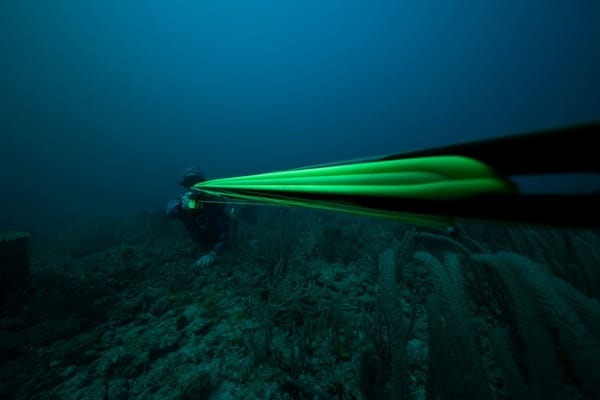
Nearly all the world's internet traffic runs through cable the width of a garden hose. How it got there, who builds it, why it breaks a couple of hundred times a year, and who goes out to fix it.

Industry Profiles
The abyssal plains contain minerals the energy transition genuinely needs. The governance framework for extracting them is unresolved. The ecological consequences are not adequately understood. Mainstream finance and insurance have largely stepped back.
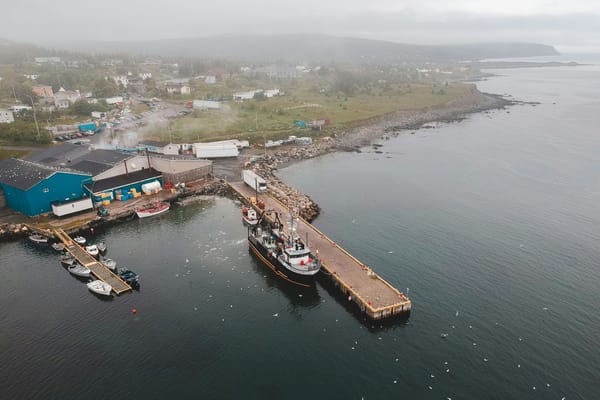
A fishing boat belongs to somebody, feeds a family, and rests on a stock that may or may not be there next year. The divisions between those things are ours, not the ocean's.
Industry Profiles
The problem is not that any single operator is doing something wrong. The problem is that the sum of individually legitimate decisions can produce outcomes that none of them, assessed alone, would justify. The whale does not appear in any balance sheet.

Taking Stock
Ten years after the Tragically Hip's last concert, a look at the ocean in their songs and the water advocacy Gord Downie carried away from the stage. A three-word standard, a decade on a charity board, and a pier across the street from his family home.
Industry Profiles
Tofino is one of Canada’s most economically successful coastal tourism destinations and one of its least livable communities for the people who make that success possible. That paradox is the entry point for understanding how coastal tourism finance actually works in Canada.
Industry Profiles
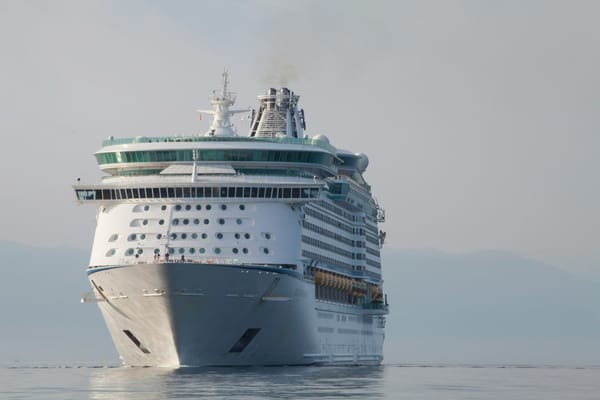
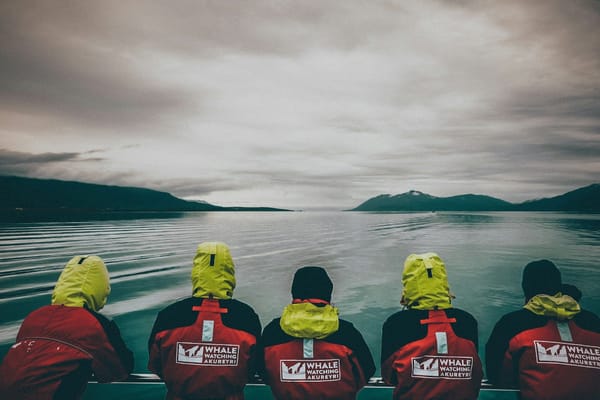
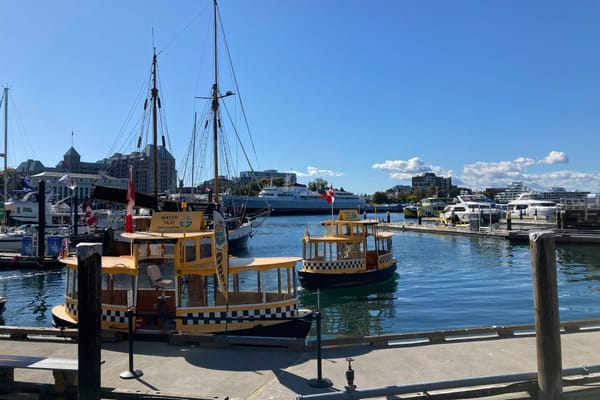
On a summer morning in Victoria, a cruise ship docks at Ogden Point. A whale watching company loads twelve people onto a rigid inflatable. An Indigenous-led cultural tour is about to begin. All three are coastal tourism. Almost nothing else about their economics is the same.
A bank can be diversified by geography, sector and borrower, yet still depend on the same natural system. Canadian concentration rules do not ask banks to look for that exposure.

The Basics
Blue finance has no governing body. The international rules are voluntary, written by five organizations together. Canada is now writing its own, with marine protection scheduled for a later phase.
Where Things Stand
Flood, fisheries exposure, port disruption. Each one sits on a bank's register as its own category, and the ocean condition connecting them sits on none of them. What OSFI's climate guidance measures, what it leaves out, and why a risk nobody can measure well ends up mispriced.
Taking Stock
Construction lenders do not release funds until an independent surveyor confirms the work was done. Blue finance has strong mechanisms for tracking where money goes, but much weaker ones for verifying what happened in the water. The capacity to close that gap already exists on Canada’s three coasts.