Canadian Banks Have No Ocean Risk Category
Flood, fisheries exposure, port disruption. Each one sits on a bank's register as its own category, and the ocean condition connecting them sits on none of them. What OSFI's climate guidance measures, what it leaves out, and why a risk nobody can measure well ends up mispriced.

The risk register is one of the more disciplined documents a financial institution produces. Every material exposure is named, assigned an owner, assessed for likelihood and severity, and reflected where appropriate in limits, pricing, capital, reserves, insurance, or hedging. Strategic risks receive ongoing review at the board level, while management-level risks cover the annual and day-to-day operating issues. The universe of risks is reconsidered regularly so that nothing remains on the register by accident, and nothing material is neglected. A risk that has not been named has not been managed, regardless of how confidently the institution speaks about it.
I spent years inside that discipline. What strikes me now, looking at it from the outside, is that environmental risks have found their way onto the register as floods and wildfires, while the ocean conditions changing what those risks mean have not. Given how much of Canada's economy runs on the ocean, that is a notable gap.
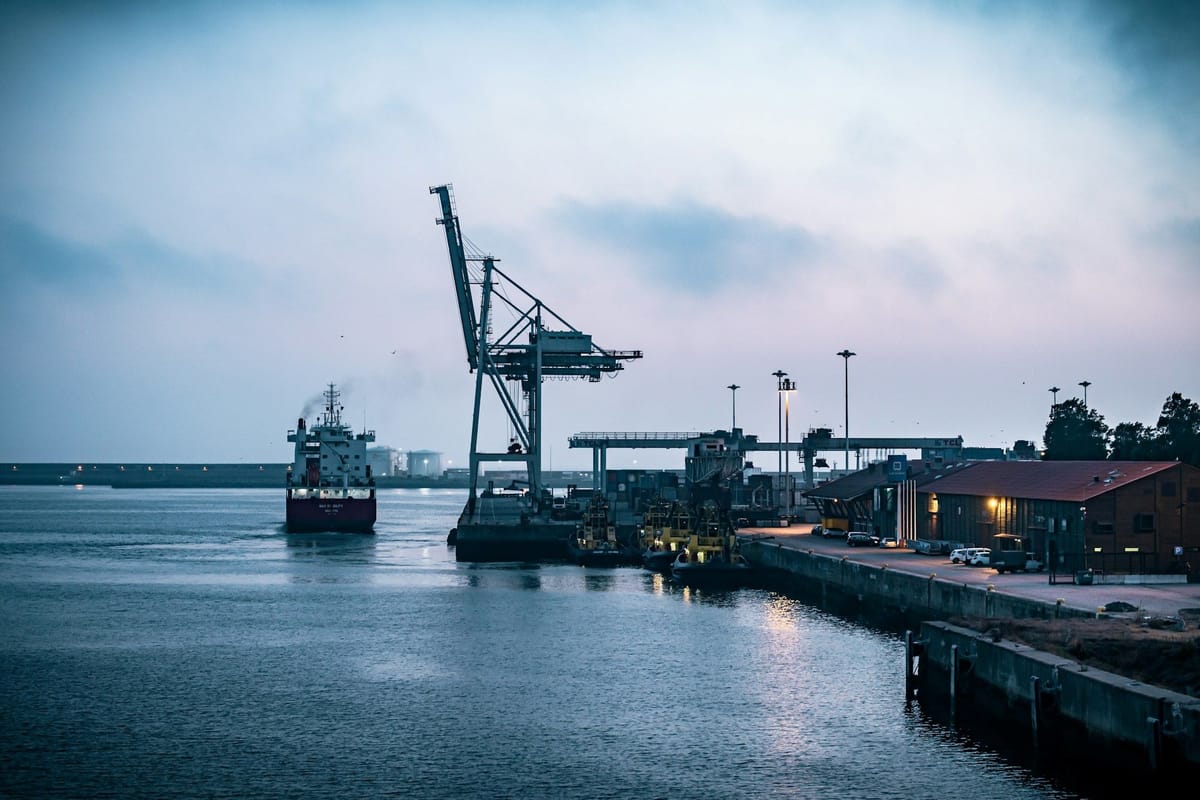
Coastal real estate secures residential and commercial mortgages. Sea level rise and storm surge are moving toward that collateral. A marine heatwave or a stock collapse can change a borrower's revenue within a single season, whether that borrower fishes, farms, or runs a hotel. Ports and shipping lanes carry the supply chains, and ocean conditions decide whether those lanes stay open: storm intensity, Arctic ice, circulation changes. Insurers recalculate coastal flood and storm risk more often than they used to. None of this is speculative. It is the ordinary operating environment of institutions that lend, insure, and invest along Canada's three coasts.
Canadian regulators have moved on this. Guideline B-15, from the Office of the Superintendent of Financial Institutions, expects federally regulated institutions to integrate climate-related risks into their risk appetite and enterprise risk management frameworks, and it treats climate as something that drives credit, market, operational, insurance, and liquidity risk instead of sitting beside them. The 2024 to 2025 Standardized Climate Scenario Exercise, run jointly by OSFI and Quebec's Autorité des marchés financiers, put that into practice across more than 250 institutions, testing flood exposure in eleven urban regions covering $904 billion in mortgage and real estate assets and $3 trillion in insured property value. That is real measurement infrastructure, and it did not exist a decade ago.
It is also where the shape of the gap becomes visible. The exercise modelled coastal flooding in one region. Vancouver was the only city in scope for it, and the methodology defines coastal flooding as flooding from bodies of water on the coast, giving the Pacific Ocean as its example. Everywhere else, the flooding modelled was riverine. Guideline B-15 itself names no perils at all. Search the current version for flood, wildfire, coastal, ocean, or biodiversity and none of them appear, because the guideline defines physical risk as acute and chronic and leaves the hazards to each institution to identify. The chain the regulator has built runs from climate to hazard to exposure. The condition of the ocean is not a link in it. An institution can reasonably say it manages flood risk. It is less able to say it manages the ocean processes that are changing what flood risk means.
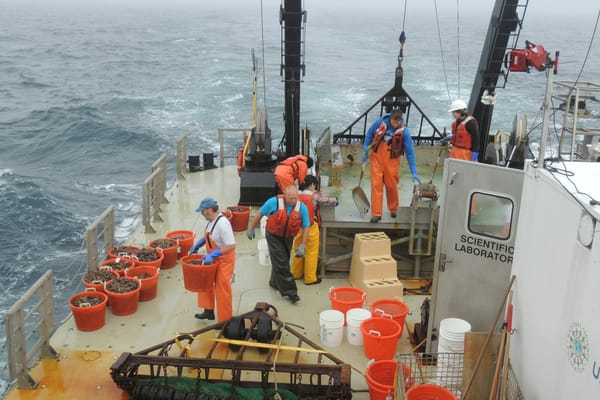
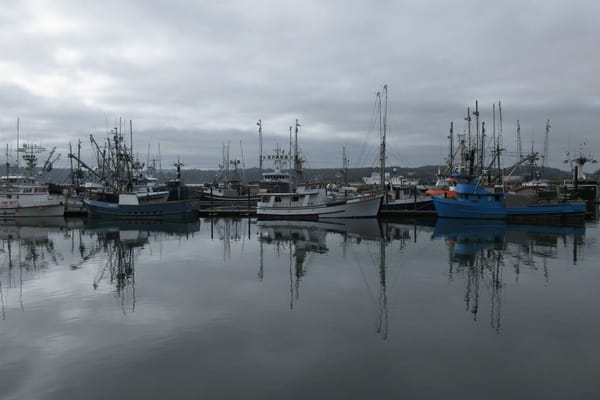
Of the ocean-linked exposures, coastal flooding is the one that entered the exercise. The others did not. Fisheries lending is recognized as sector exposure, assessed through the same lens applied to any primary industry borrower. Port and supply chain disruption can surface as operational, business, or credit risk, and the exercise excluded supply chain effects by its own account. In both cases the ecological conditions that determine whether the loan performs go unnamed.
British Columbia's salmon aquaculture sector shows how this works in practice. A conventional credit analysis of BC salmon farming would focus on production, market access, operating costs, licenses, and the borrower's financial capacity. What that analysis would not isolate is the ecological relationship between farmed and wild salmon, and the disease and sea lice dynamics tied to ocean conditions. Those questions ran through the long debate that ended with the federal decision to prohibit open-net pen salmon aquaculture in BC coastal waters after June 30, 2029. Lenders to that sector were carrying an exposure that ran through the ocean, and it reached them as a policy decision that changed the economics of the industry.
Peru shows the same thing without the regulatory step. In 2023, unusually warm El Niño conditions altered anchovy distribution and left an unusually high share of juveniles in the fishery, leading Peru to cancel the first north-central fishing season. One industry estimate put the resulting loss of fishmeal and fish oil export revenue at about US$1.4 billion. The shock was oceanographic in origin and financial in consequence, and it landed on an industry whose exposure would have been read as ordinary commodity or sector risk.
Underneath both examples is a simple mechanism. A risk that cannot be measured well is difficult to price, limit, stress, or allocate capital against with any confidence. A risk function identifies exposures, measures them with enough data and model history to estimate how severe the loss could be, and then decides how that should affect underwriting, pricing, limits, capital, reserves, or other mitigation. Ocean-linked risks are weakest at the measurement step. There is no equivalent of the flood depth threshold for a fishery's exposure to a marine heatwave. There is no standard methodology, comparable across institutions, for what a thirty percent decline in a regional fish stock means for a portfolio of lending relationships built around that fishery. When measurement is weak, the risk stays embedded inside broader credit, sector, operational, and insurance assumptions instead of being separately visible and priced.
That is the mechanism through which poorly measured ecological risk becomes mispriced financial exposure, absorbed first by the community, the borrower, or the uninsured asset owner, and eventually by the institution whose portfolio was more exposed than its register reflected. Blue finance is building the measurement that has been missing: methodologies connecting changing ocean conditions to fisheries, aquaculture, and coastal real estate, parametric insurance that pays on a measured trigger instead of an assessed loss, and climate scenario analysis extended past flood to the full range of ocean-linked physical risk.
Building that measurement is the same discipline that built modern credit risk management, applied to a category of risk that institutions have not yet had the tools to see clearly, let alone price. Nobody in a bank owns the ocean as a risk. Somebody could own the measurement, much like a carbon footprint.