Who Pays for Marine Protected Areas
Canada has spent hundreds of millions establishing marine protected areas. The harder question is whether the funding and governance behind them are built to last as long as the protection itself.

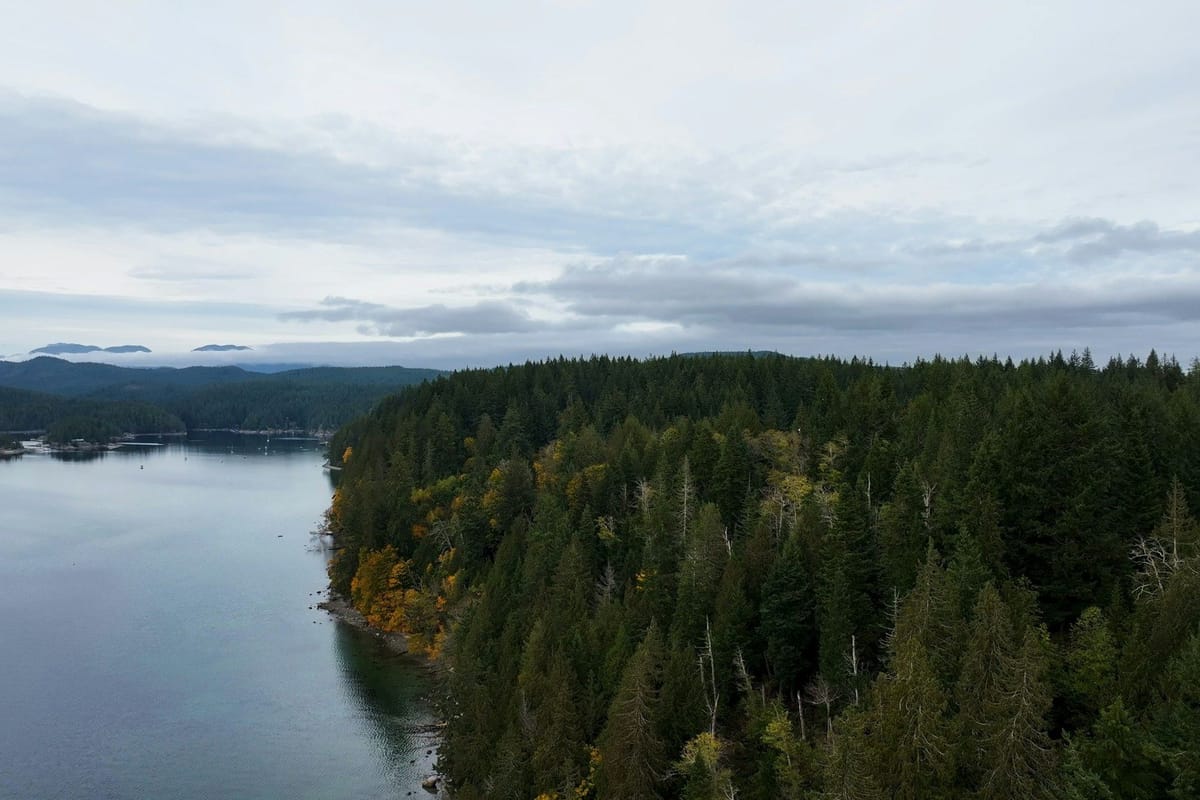
Designating a marine protected area is the easy part. A boundary is drawn, a regulation is published, and the area counts toward Canada's 30 percent target. What happens inside that boundary afterward, whether it is monitored, whether violations are detected and addressed, whether the ecological objectives that justified the designation are being achieved, depends on a much harder and much less visible question: who pays for it to keep working.
Canada's disclosed federal funding for marine conservation gives a partial answer. The Marine Conservation Targets initiative, led by Fisheries and Oceans Canada alongside Parks Canada, Environment and Climate Change Canada, Transport Canada, Natural Resources Canada, and Crown-Indigenous Relations and Northern Affairs Canada, was allocated $188.5 million in planned spending for 2024-25 and $184.4 million for 2025-26. Within that envelope, the portion specifically tied to establishing, monitoring, and managing MPAs and OECMs was $150.4 million and $147.4 million respectively. Since the initiative's renewal, the cumulative allocation has reached $842.6 million, with $667.3 million directed to the establishment, monitoring, and management category.
What that figure does not cleanly separate is establishment from ongoing management. Federal disclosure mixes the cost of designating new areas, conducting the science and consultation that designation requires, building Indigenous co-governance relationships, monitoring ecological conditions, and enforcing restrictions, all under one funding envelope, organized by activity across multiple departments, not by individual site. That makes it difficult to answer a deceptively simple question: once an MPA exists, what does it actually cost per year to manage it well, and is Canada currently spending that amount.
The global comparison suggests the gap may be significant. A 2025 global assessment estimated ongoing management costs for ocean conservation worldwide at approximately $15.2 billion annually, against a one-time establishment cost of roughly $3.2 billion. The ratio matters: designating protected areas is, in relative terms, the cheap part. Managing them properly, with monitoring, enforcement, and adaptive response to changing conditions, costs roughly five times as much annually as it costs to establish them in the first place. Older global research found that effective MPA operating costs varied enormously by site, with a median around $775 per square kilometer per year, and estimated that a global network covering 20 to 30 percent of the ocean could require $5 billion to $19 billion in annual management spending. Canada's disclosed marine conservation spending, even at its full $188.5 million annual envelope, is a modest fraction of what the upper end of that global benchmark would imply for a network approaching 30 percent of Canada's ocean territory.
Indigenous Guardian programs offer one of the more concrete and well-documented funding models within this picture, precisely because they operate at a scale where costs are visible and outcomes are measurable. Coastal First Nations' Guardian Watchmen program, which monitors and stewards marine territory across the Pacific coast, has been benchmarked at an average cost of roughly $300,000 per program annually, covering wages, vessels, equipment, training, and data systems. A valuation study found at least a tenfold annual return to participating Nations from that investment, accounting for the economic, cultural, and ecological value the programs generate relative to their cost. That ratio is part of why Guardian programs have become a central feature of how Canada delivers on-the-ground MPA management in practice, even though they sit institutionally apart from the federal departmental funding lines that dominate official disclosure.
The Great Bear Sea Project Finance for Permanence, which closed in 2024 with $335 million in committed capital, represents the most structurally significant response to the underlying problem this funding picture reveals. That problem is a duration mismatch. The commitment a protected area represents is effectively permanent; much of the funding behind marine conservation is appropriated for fixed periods and ultimately subject to renewal. The $167 million Marine Stewardship Fund addresses that mismatch directly: $152 million was placed in a permanent endowment, while $15 million was structured as flexible, initially spend-down funding. The endowment is designed to preserve its capital and generate income indefinitely for Guardian programs, monitoring and collaborative governance across the Northern Shelf Bioregion. Matching part of the financing to the duration of the stewardship commitment is something an annual appropriation cannot do. The structure exists because grant-based and appropriation-based funding, however well-intentioned, has not historically provided the durable, multi-decade funding effective marine stewardship requires.
The honest assessment of Canada's current position is that the country has built meaningful funding infrastructure for establishing marine protected areas and has begun building more durable financing models, through Indigenous-led conservation finance and Project Finance for Permanence structures, for managing some of them. What remains underdeveloped is a clear, comprehensive answer to what effective management actually costs across the full network Canada is committed to building, and a funding architecture, federal or otherwise, sized to that cost, not to whatever happens to be politically available in a given budget year. The Commissioner of the Environment and Sustainable Development's 2025 finding that federal departments lack an updated collaborative plan for reaching a representative 30 percent network applies as much to the financing question as to the designation question. A protected area without a durable funding model behind it is, in practical terms, a boundary on a map and a line item in a report. Whether Canada's marine conservation commitment becomes something more than that depends less on how many more square kilometers get designated and more on whether the financing behind each one is built to last as long as the commitment itself.