Can Canadian Directors Raise Environmental Issues at the Board?
A Canadian director can raise ocean exposure at the board. The harder problem is that the exposure is spread across functions and nobody owns the whole picture.
ALL ESSAYS
Everything published so far about where Canada’s oceans meet finance, policy and stewardship.
95 pieces
A Canadian director can raise ocean exposure at the board. The harder problem is that the exposure is spread across functions and nobody owns the whole picture.
A missed payment follows a borrower to the next lender. A fuel spill in a First Nation's fishing grounds usually doesn't. Why environmental history stays behind, and where it travels.
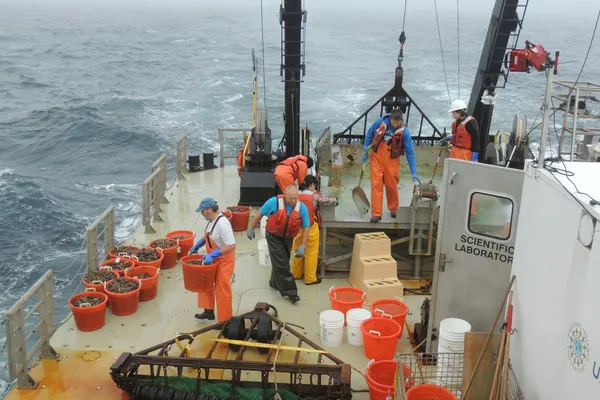
Collecting and processing ocean data has got cheaper and faster. Knowing what we are doing to the ocean has not. Observation, interpretation and assurance are three different problems.
Amsterdam in 1609, Lloyd’s coffee house and a Chicago grain elevator all turn on the same question: what has to exist before a stranger will finance something they cannot inspect?
The industries that are obviously part of the ocean economy are not hard to identify. They are not the whole story. The ocean economy extends into agriculture, insurance, energy, retail, and municipal finance through pathways that are real and consequential but rarely made explicit.
Blue carbon has the scientific case, the policy intent, and the private capital interest. Progress is still slow. The reason is not lack of ambition. It is that the measurement infrastructure required to make blue carbon credits bankable does not yet exist at the scale the opportunity requires.
Harvesting gets the attention; processing and distribution capture the value. Across 551 facilities, Canada's processors turn $7.8 billion in revenue into an export trade that runs on certification, cold-chain capital, and currency risk.
A pension liability and a port terminal share an unusual trait: both run for decades. That makes pension capital a natural home for ocean infrastructure, and Canada's funds already hold it. What they lack is an allocation category that would let them fund the ocean economy on purpose.
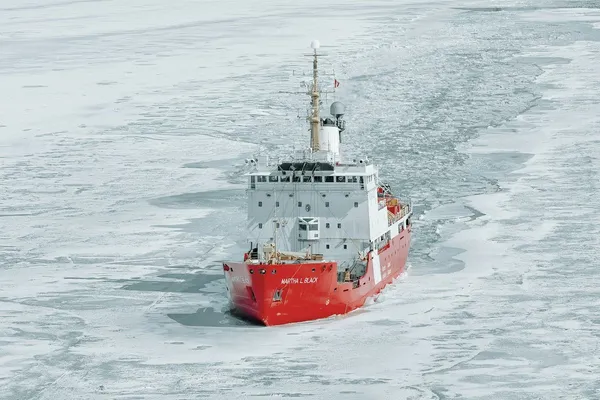
In 2020, Canada chartered a foreign icebreaker for Arctic search and rescue while promoting a multi-billion dollar domestic icebreaker program as evidence of sovereignty. Both things were true simultaneously. That is the central tension in Canadian shipbuilding policy.
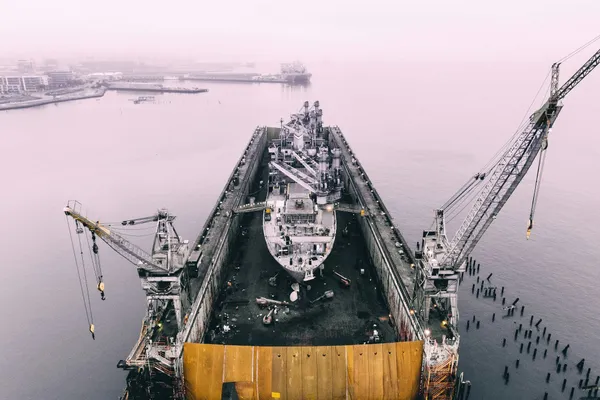
Seaspan won a fixed price contract to build three fisheries science vessels, delivered them, and lost significant money in the process. That outcome is not a scandal or an anomaly. It is a precise illustration of how shipbuilding finance actually works in Canada.
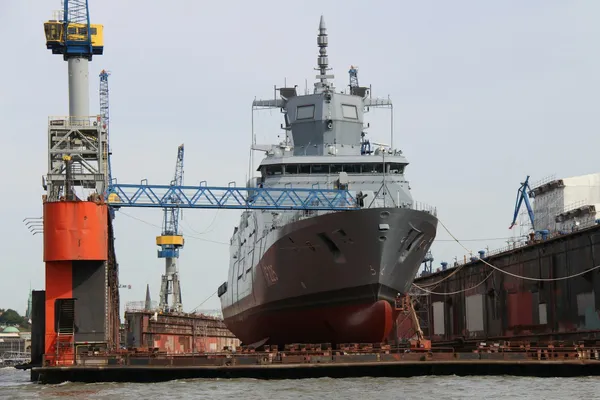
Canada's National Shipbuilding Strategy is worth approximately CAD 60 billion and represents around 0.1 percent of GDP. That contrast is the starting point for understanding what Canadian shipbuilding actually is and is not.
In September 2019 the water off Newfoundland turned milky blue in the wrong month. What that colour is made of, and why somebody has been sampling the same spot in Halifax Harbour since 1992.