How Pension Funds Allocate Ocean Capital
A pension liability and a port terminal share an unusual trait: both run for decades. That makes pension capital a natural home for ocean infrastructure, and Canada's funds already hold it. What they lack is an allocation category that would let them fund the ocean economy on purpose.

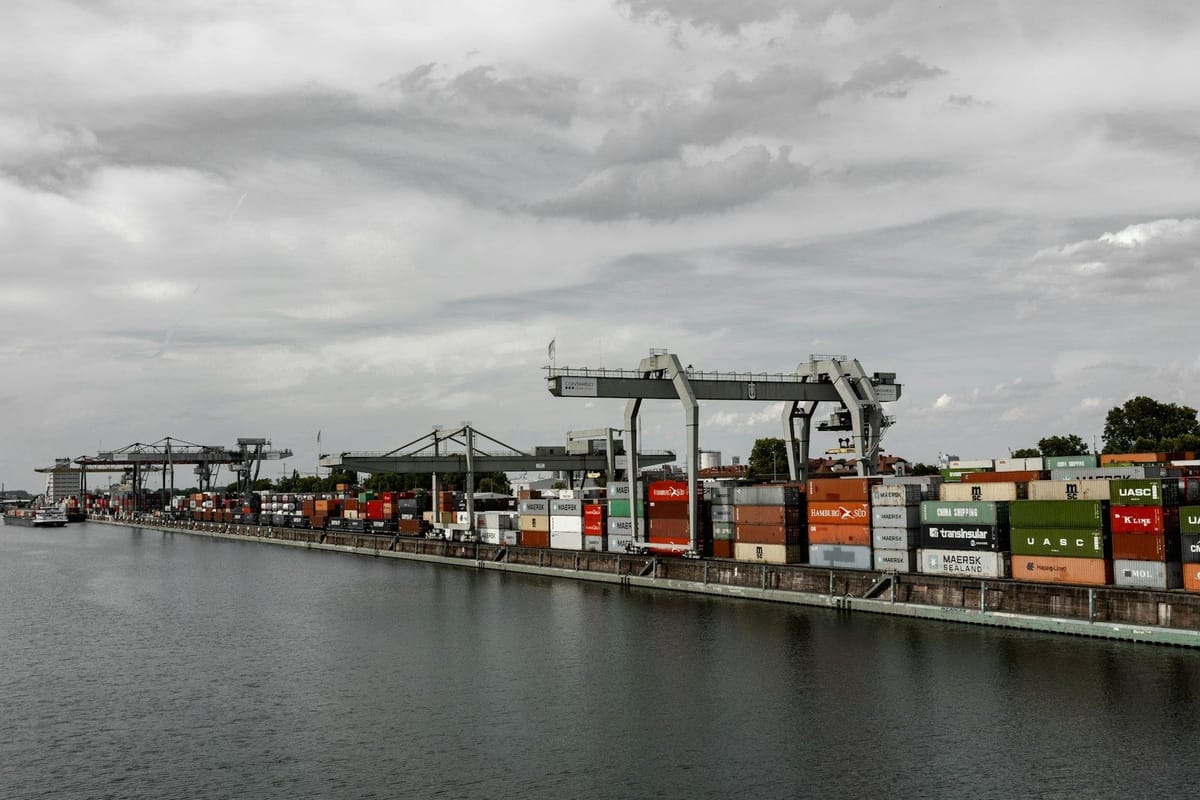
A Canadian pension fund holds liabilities that stretch across decades. A worker contributing today expects a payment thirty or forty years from now, and the fund managing that promise has to invest accordingly, in assets whose returns can be reasonably expected to materialize across a comparable time horizon. Ocean infrastructure, container terminals, ports, marine energy assets, operates on much the same clock. A port terminal built today will still be generating revenue in thirty years if it is well maintained and well positioned. That alignment between a multi-decade liability and a long-lived, cash-generating real asset is one reason infrastructure has become such a natural fit for pension capital. Ports and marine terminals sit comfortably within that logic.
The mechanism through which that capital reaches ocean assets is often indirect. A pension fund does not typically negotiate with a fishing community or finance a single wharf. Influence runs through diversified infrastructure portfolios, public equity holdings in companies that operate ports and shipping assets, and private market investments in platforms that may include marine terminals alongside airports, toll roads, and energy infrastructure. The exposure is large in aggregate and difficult to isolate in any individual fund's disclosure, because ocean assets are categorized as infrastructure or transport, not as a distinct ocean or blue economy allocation.
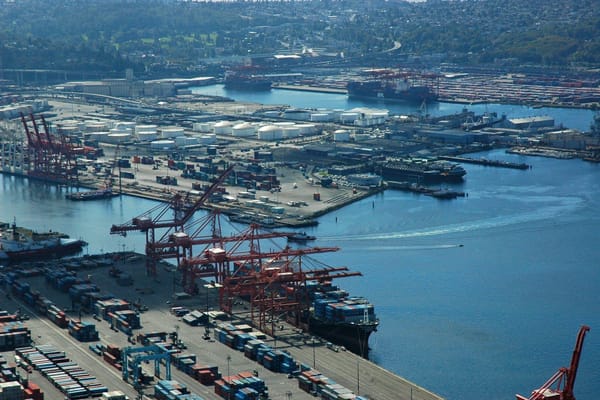
Canada's largest pension funds, commonly grouped together as the Maple Eight, collectively manage well over $2 trillion in assets, and the infrastructure allocations within that total are substantial. Using their 2025 fiscal or calendar year-end figures, CPP Investments, with $714 billion in net assets as of March 2025, was sole owner of Ports America, North America's largest independent marine terminal operator, having first invested in the company in 2014. La Caisse, formerly CDPQ, managed $517 billion at the end of 2025 and held infrastructure assets worth $74.5 billion, roughly 14 percent of net assets, including investments in port operations through its longstanding partnership with DP World. PSP Investments held a 51 percent jointly controlled interest in Forth Ports Limited alongside its other infrastructure holdings. BCI describes port terminal investment directly as part of its infrastructure strategy and has highlighted West Coast Canadian port expansion in its public commentary. Ontario Teachers' and BCI are both investors in Global Container Terminals, operator of Deltaport and Vanterm at the Port of Vancouver; Ontario Teachers' held $34.5 billion of infrastructure assets at the end of 2025. None of these funds frame these holdings as ocean-related. They frame them as infrastructure, transport, or logistics.
That framing is not an oversight. It reflects how institutional asset allocation actually works. Pension funds build portfolios around risk-adjusted return targets within asset classes, infrastructure, fixed income, public equities, private equity, real estate, not around thematic categories tied to a specific resource system. A port terminal earns its place in an infrastructure allocation because it can generate stable cash flows over long horizons, characteristics that can fit the needs of a pension fund with long-dated obligations. Its marine character is not the organizing principle of the investment thesis. The terminal is assessed as transport infrastructure, even though the volume of cargo moving through it depends on trade flows, the health of the shipping and fisheries economies that feed it, and the long-run stability of the coastline it occupies.
The consequence is that the duration match does not appear as a deliberate ocean strategy. A trustee approving a port acquisition is doing so because the asset clears an infrastructure return hurdle, not because the fund has established an allocation to ocean infrastructure as such. There is no comparable allocation line visible in the funds' public disclosures. A fund can hold a defensible target for infrastructure, or real estate, or private credit, and steer capital toward it on purpose. It has no comparable bucket for the ocean economy, so the marine character of these assets enters the portfolio one transaction at a time, as a property of individual deals rather than an explicit ocean-economy position. The capital arrives. The intention is not visible at the portfolio level, because the framework offers no distinct place to express it.
Patient capital is, in principle, a natural funder of some forms of ocean infrastructure, and Canada's funds have shown they will hold it. CPP, La Caisse, PSP, BCI, and Ontario Teachers' all carry marine infrastructure positions today. What is absent from their public asset-allocation frameworks is a category that would let them build those positions deliberately, size them against a view of the ocean economy, and steward them with that economy's long-run health in mind, from port modernization to offshore energy to climate-resilient coastal development. Until that category exists, the country's largest pools of long-term capital will keep funding the ocean economy without treating it as a distinct allocation, holding more of it than they separately track and directing less of it than their time horizons might allow. The fit is already there. The decision to use it has not been built.