Ports: Gatekeepers of the Blue Economy
A port is not optimized for any single thing it does. It is a negotiation between functions that don’t agree, on timescales that don’t align, conducted by an authority holding five roles at once. How well that goes decides much of the blue economy’s cost.
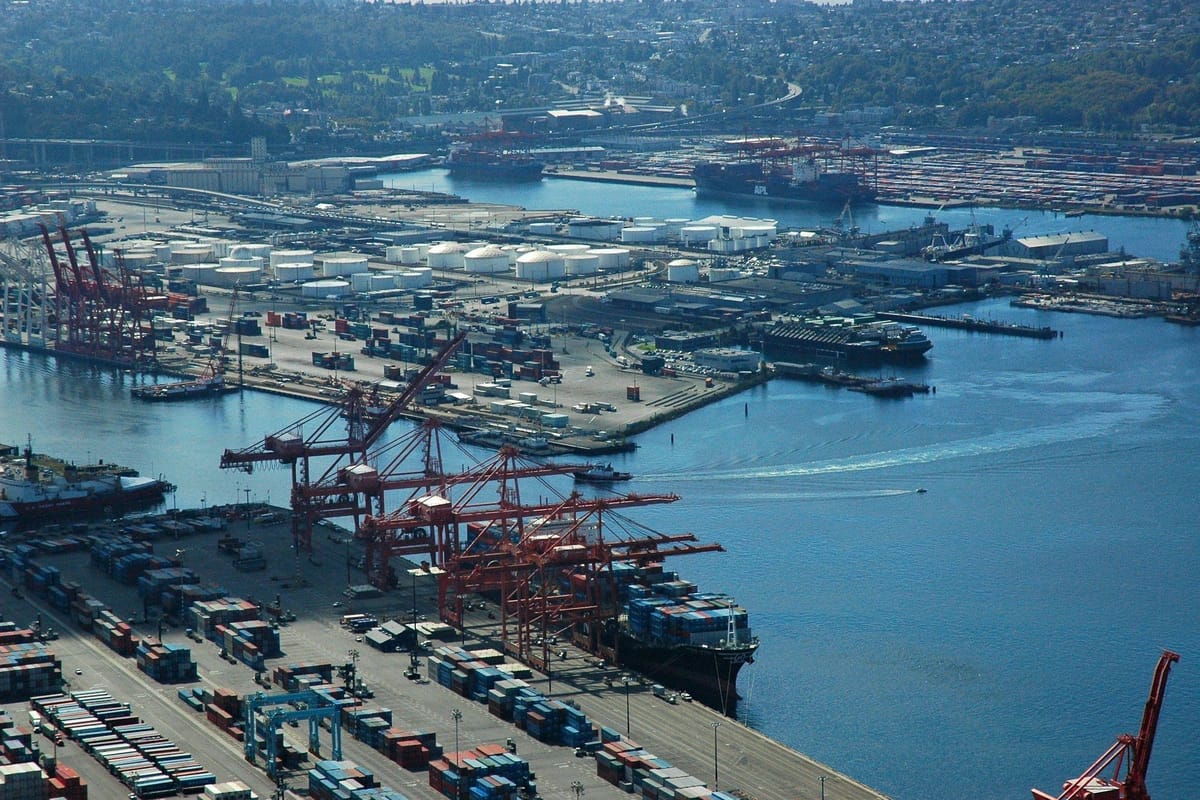
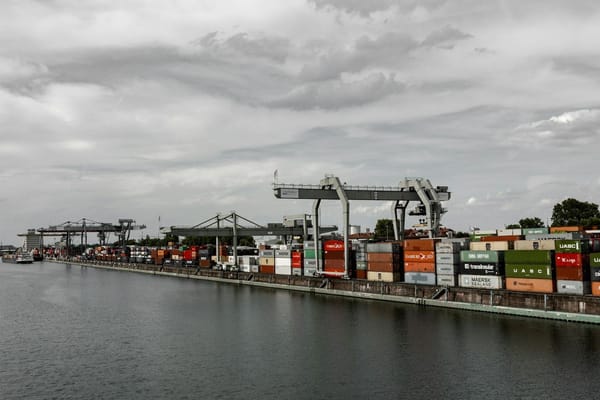
The Port of Vancouver handled 158 million tonnes of cargo in 2024, a record, representing roughly $240 billion in imports and exports. Prince Rupert handled 23 million tonnes. Halifax processed more than 500,000 container units. Montreal moved 35 million tonnes along the St. Lawrence. Behind those numbers is a harder fact than the tonnage suggests: a port is not optimized for any single thing it does. It is a negotiation between functions that do not naturally agree, conducted on timescales that do not naturally align, and the quality of that negotiation determines far more of the blue economy’s cost than the throughput figures reveal.
Consider what a single major port authority is at once. It is a landlord leasing terminal land to private operators, a regulator setting the rules those operators work under, an infrastructure manager responsible for dredged channels and breakwaters, an economic development agency answering to regional growth expectations, and an environmental steward accountable for the marine corridor its traffic runs through. None of these roles fully reconciles with the others, and the authority holds all of them on a timeline that extends decades beyond the political cycles that fund and govern most public institutions. The Roberts Bank Terminal 2 expansion, approved federally in 2023, will add 2.4 million container units of annual capacity to Vancouver’s system when built. The Contrecœur terminal expansion in Montreal is designed for 1.15 million additional units per year. These are not incremental upgrades. They are commitments to a particular version of coastal economic geography that will determine what happens on those waterfronts for generations, made by institutions that must balance the competing claims on that geography in the same decision.
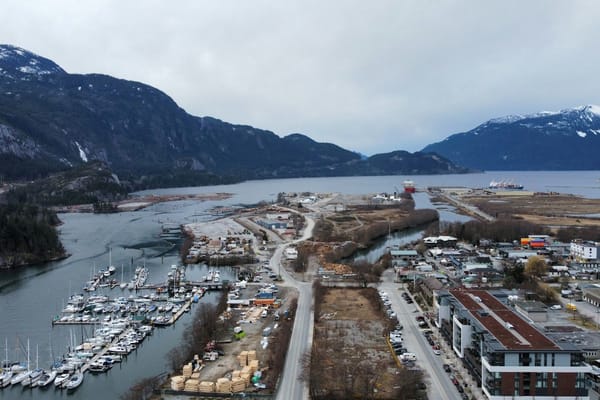
The competition for that waterfront is not abstract. Canada’s port system includes bulk terminals handling grain, coal, and potash; fishing harbours that anchor coastal food systems; energy terminals moving liquefied petroleum gas, methanol, and refined products; cruise terminals supporting tourism in Vancouver, Halifax, and Victoria; and remote Arctic supply ports that function as lifelines for communities with no road access. Each function has a different customer, a different revenue profile, and a different set of pressures, and they draw on the same finite resource: the boundary between land and sea where decisions about what gets built and what gets prioritized are made. The negotiation is what happens when a container expansion and a fishing fleet and a climate obligation all have a legitimate claim on the same berth.
The environmental side of that negotiation is concentrated and varied. Dredging to maintain navigable channels disturbs seabed habitat and releases sediment that affects water quality and marine organisms. Vessel traffic generates underwater noise that affects marine mammals using the same corridors. Air emissions from ships at berth have historically been a significant source of particulate pollution in port cities, which is the primary driver behind shore power investment. The 2024 Canadian port readiness study found that Vancouver, Montreal, Halifax, and Prince Rupert had standardized high-voltage shore power systems, though adoption by visiting vessels remains uneven: roughly 56 percent of cruise vessels visiting major Canadian ports are shore-power capable, compared with only 11 percent of container vessels. Prince Rupert’s Fairview Container Terminal shore power system is forecast to reduce emissions by nearly 30,000 tonnes of CO2 annually once large container vessels connect to both berths. Federal funding through the Green Shipping Corridor Program has committed $127 million over four years to shore power, vessel electrification, clean fuel infrastructure, and vessel incentives, with 12 projects approved in 2024 committing roughly $136 million in total.
Where environmental objectives meet trade realities, the negotiation becomes most visible, and its limits become clearest. A port that restricts vessel speeds in whale protection zones is imposing costs on shipping companies and their customers to protect marine mammals in the same corridor. A port that invests in shore power is betting that vessel operators will equip their ships to use it, a decision that depends on regulatory signals that have not yet fully materialized. The green shipping corridor between Halifax and Hamburg, supported by up to $22.5 million in federal funding announced in February 2025, is an attempt to build both the port infrastructure and the regulatory framework for low-emission shipping on a specific route at once. Whether it succeeds depends on whether enough vessel operators make the corresponding investment in their ships on the same timeline. This is the structural limit of what a port can do: it can build the infrastructure for transition, but it cannot mandate the transition itself.
The Indigenous governance dimension has grown more substantive and more complex across the past decade, and it changes who sits at the table for the negotiation. Port authorities work within territorial boundaries that overlap with Indigenous title, treaty rights, and governance responsibilities in ways that require engagement beyond standard consultation. The Vancouver Fraser Port Authority has secured consent from 27 First Nations through signed mutual benefit agreements in connection with Roberts Bank Terminal 2. Prince Rupert’s port reports more than $230 million in contracts directed to Indigenous-led businesses since 2011, alongside revenue sharing and employment agreements with regional Nations. The Ridley Island Energy Export Facility, the largest investment in Prince Rupert port history at $1.35 billion, secured First Nations support agreements at the time of its May 2024 final investment decision, though subsequent reporting indicates the Metlakatla First Nation’s position became contested in 2026. That sequence, announced support followed by dispute, reflects the genuine difficulty of consent where port development affects Indigenous territorial interests in ways that benefit agreements do not always fully resolve.
Climate exposure raises the stakes of every one of these decisions, because it changes the ground the negotiation stands on. Ports sit precisely where rising seas, intensifying storms, and changing precipitation converge with trade infrastructure, energy systems, and coastal development. Assets built to historical assumptions about sea level, storm surge, and flood frequency are already being assessed against projections that require different design standards. The Canada Infrastructure Bank’s $150 million investment in Prince Rupert’s CANXPORT logistics hub, announced in May 2024, is an example of public capital upgrading port infrastructure for future trade flows, though protection against climate exposure rather than capacity expansion is the more pressing investment need at many existing facilities. Globally, the C40 Cities Finance Facility, the International Finance Corporation, and the International Association of Ports and Harbours estimated in 2025 that ports will require between one and two trillion dollars in cumulative investment through 2050 for shore power, alternative fuel infrastructure, and zero-emission cargo handling equipment. That scale will require private capital, and in Canada the financing model remains primarily public-sector-led, with private capital entering through terminal concessions, logistics facilities, and energy export infrastructure rather than through port authority debt instruments.
This is what ports reveal about the blue economy. They are the places where its incompatible demands are forced into a single decision, on assets that outlast any particular trade pattern or regulatory regime, by institutions holding five roles that do not reconcile. The ocean economy depends on that negotiation going reasonably well. When it does, the system is invisible and the tonnage figures are the only thing anyone sees. When it does not, the costs are distributed across fisheries, communities, supply chains, and marine systems, and they are seldom traced back to the port decisions that produced them. The gatekeeper function is real, but it is not control. It is the daily work of balancing claims that cannot all be satisfied, and getting the balance close enough that the failures stay rare.