The Canada Infrastructure Bank and What It Means for Blue Finance

The Canada Infrastructure Bank works at the edges of conventional finance, on projects that are larger, longer, and more complex than most institutions will touch. That puts it at the centre of how blue finance could develop in Canada.

Share
The Canada Infrastructure Bank and What It Means for Blue Finance
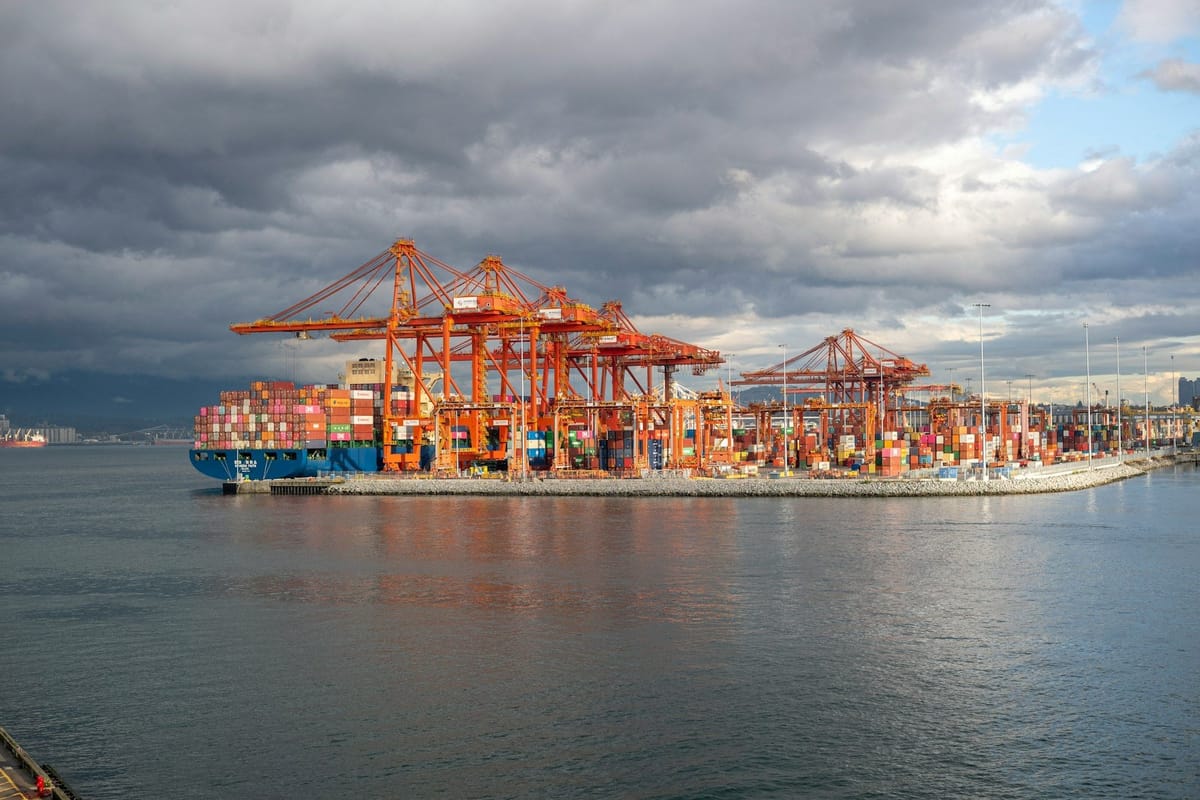
Photo by Dillon Hunt / Unsplash

The Canada Infrastructure Bank has been operating for nearly a decade with a clear mandate and a growing portfolio. Even for industry insiders, the CIB is not top of mind. It does not provide day to day lending or participate in capital markets conversations in the way that banks and credit unions do. It works on projects that are larger, longer in duration, and more complex than those typically financed through conventional channels.

A recent posting for a director role brought the CIB into sharper focus. Board composition matters because it signals where an institution is headed. For anyone watching how blue finance develops in Canada, the CIB is worth understanding. It is one of the few institutions with the mandate, the time horizon, and the structural capacity to finance the kinds of projects that will define how Canada's ocean economy develops over the next generation.

Established in 2017 as a federal Crown corporation, the CIB's mandate is to invest in infrastructure projects that are in the public interest but may not move forward through conventional financing on their own. It does this by using public capital to attract private investment, participating in projects where the scale, structure, or risk profile would otherwise limit the ability to raise capital. Its focus areas include clean power, green infrastructure, transportation, trade corridors, and broadband. These are sectors where projects tend to be capital intensive, long lived, and closely tied to how the broader economy functions.

Understood this way, the CIB is not simply a source of funding. It is part of how capital is directed at a system level, and that distinction becomes relevant when those systems intersect with the ocean.

Many of the activities within the CIB's scope operate in coastal or marine environments. Ports, shipping infrastructure, energy systems, and northern development all take place within conditions that the ocean influences. Those conditions are not fixed. They change as ocean temperatures, ice cover, and weather patterns shift, and those changes affect how assets perform, how they need to be maintained, and how they interact with surrounding systems over the life of a project.

This is where the connection to blue finance becomes more direct. Blue finance tends to be described in terms of specific instruments or labelled products. Those exist, but the more common connection is embedded in how projects are financed in the first place. Consider a port expansion on the north coast of British Columbia, assessed over a forty year horizon. The assumptions behind that assessment, about ice conditions, storm exposure, sea level, and the durability of surrounding infrastructure, are environmental assumptions whether or not they are labelled as such. A financial institution willing to hold that project over its full life has to get those assumptions right. The CIB, by mandate and by structure, works in exactly that territory.

In practice, this can show up in relatively straightforward ways. Expected operating conditions can be extended beyond initial projections. Exposure to changing environmental conditions can be incorporated into how risk is assessed. Design choices that improve long-term resilience can be treated as part of the asset rather than as additional cost. None of this requires a separate category of financing. It reflects how existing frameworks are applied when the time horizon is long enough to make those factors material.

The CIB's structure creates space for that kind of application. It operates with longer time horizons and a broader mandate than most financial institutions. It can participate in projects where outcomes unfold across extended periods and where multiple systems intersect. That is not a guarantee of how decisions will be made, but it is the condition under which a wider set of factors can be considered.

There are real constraints. The CIB operates within a defined mandate and projects still need to be financially viable. Capital still needs to be deployed in ways that support long-term sustainability. Governance and political oversight determine what the institution can and cannot do, and those questions will rightly receive scrutiny as the portfolio grows.

But within those constraints, what matters is how decisions are made. Which projects are selected, how they are structured, and what assumptions sit behind them will determine the Canada Infrastructure Bank's actual influence over time. Canada has no shortage of ocean-adjacent infrastructure that needs to be built, maintained, or replaced over the coming decades. The question is whether the institution designed to finance that work will do so with a clear understanding of the conditions those assets will actually operate within. That is not a blue finance question in the narrow sense. It is a basic question about whether long-term public investment is being assessed on realistic terms.