
The Rules
Can Canadian Directors Raise Environmental Issues at the Board?
A Canadian director can raise ocean exposure at the board. The harder problem is that the exposure is spread across functions and nobody owns the whole picture.
The rules, agreements, and frameworks that govern the ocean economy, both within Canada and across the international waters no single country controls. This section covers marine protected areas, the high seas and Antarctic regimes, deep sea mining, and the global bodies that coordinate ocean governance. Knowing how the ocean is governed, and by what, is part of understanding how its outcomes are determined.
The Rules
A Canadian director can raise ocean exposure at the board. The harder problem is that the exposure is spread across functions and nobody owns the whole picture.
The Rules
Not all ocean protection is equal. Less than half a percent of Canadian waters are strongly protected; the rest is a patchwork of partial restrictions across three federal departments and a fourth, looser category. A designated area without staff, budget, and monitoring is just a boundary on a map.
The Rules
More than 120,000 ocean observations flow into global forecasting systems every day, coordinated by a UNESCO body few could describe with precision. The data it maintains is what coastal risk models, catastrophe pricing, and blue finance rely on.
The Rules
The UN Ocean Decade runs from 2021 to 2030 with seven ambitious outcomes. Its real contribution is narrower and more useful: making ocean ignorance less defensible, and lowering the information costs that make ocean-linked financial decisions hard to make well.
The Rules
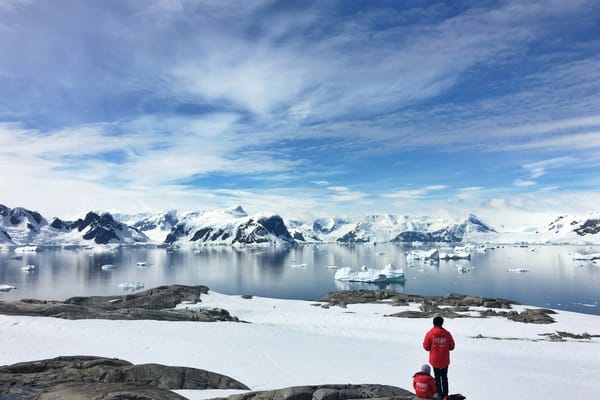
Antarctica is the one place where governments negotiated a full regime for mining, spent six years on it, and then walked away and banned the activity instead.
The Rules
The High Seas Treaty, formally the BBNJ Agreement, creates the first process for protecting biodiversity in the two-thirds of the ocean beyond any country's jurisdiction. It entered into force in January 2026. What it can do, what it cannot, and why Canada is not yet a Party.