The Intergovernmental Oceanographic Commission

More than 120,000 ocean observations flow into global forecasting systems every day, coordinated by a UNESCO body few could describe with precision. The data it maintains is what coastal risk models, catastrophe pricing, and blue finance quietly rely on.

Share
The Intergovernmental Oceanographic Commission
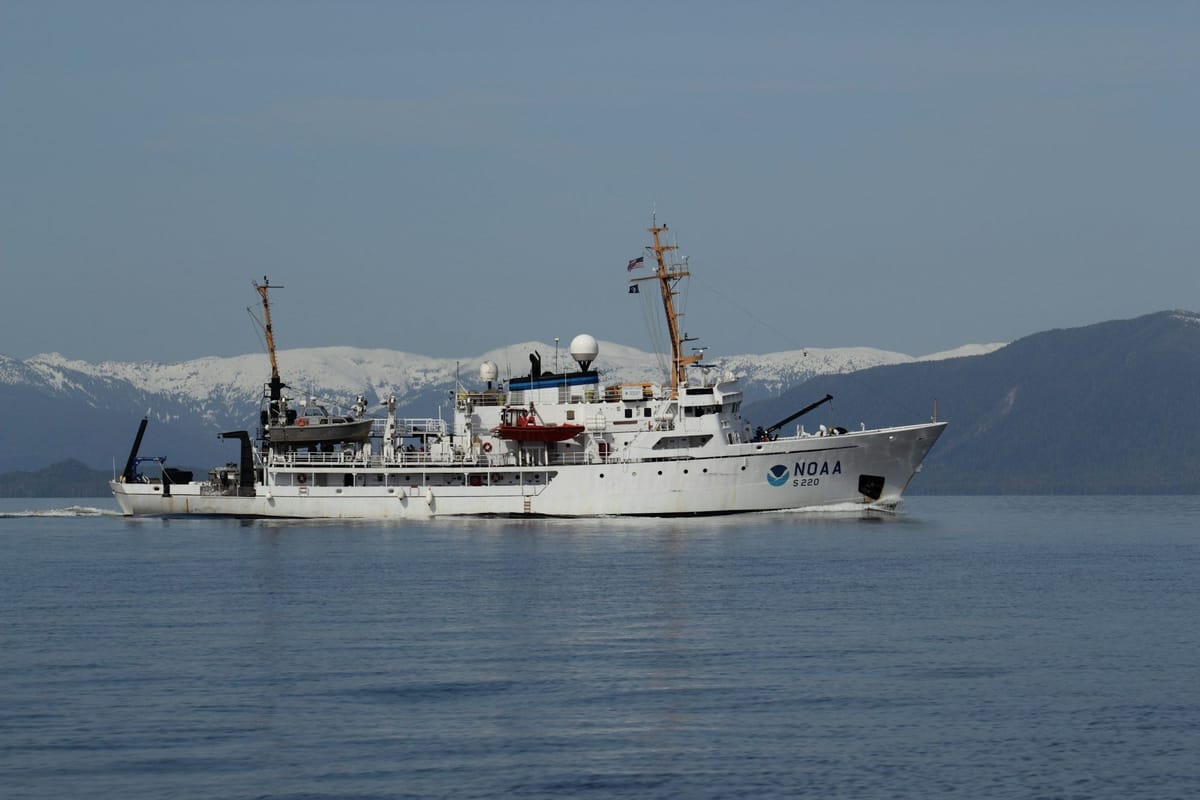
Photo by NOAA / Unsplash

Every day, more than 120,000 observations flow from ocean monitoring platforms into the forecasting systems that governments, shipping operators, emergency managers, and climate modellers depend on. Temperature readings from Argo floats drifting at depth across every ocean basin. Tsunami warning signals from seismic networks coordinated across four regional systems. Biodiversity records from more than a thousand institutions in 99 countries, accumulating in a shared database at a rate of more than a million new entries per month. The infrastructure behind those observations is not owned by any single country or institution. It is coordinated, standardized, and maintained through the Intergovernmental Oceanographic Commission of UNESCO, a body that many people working in ocean-adjacent industries have heard of but few could describe with precision.

The IOC was established in 1960 with a mandate to promote international cooperation in ocean research, observation, and data exchange, and to translate that knowledge into tools governments can use for ocean management, environmental protection, and sustainable development. It now brings together 153 member states whose collective contribution funds, operates, and provides data to a set of global systems that no single country could maintain alone. Its governing structure is straightforward: an Assembly of all member states sets policy and priorities, meeting every two years, and an Executive Council acts between sessions. The Chair and five Vice-Chairs represent geographic groups across the membership.

The Global Ocean Observing System, known as GOOS, is the most consequential infrastructure IOC coordinates. GOOS links more than 8,700 observing platforms across 13 global networks, operated by 83 member states, delivering continuous data on ocean temperature, salinity, currents, sea level, and biogeochemical conditions. The platforms range from moored buoys and ship-based instruments to autonomous floats and satellites. Canada's contribution runs through the Canadian Integrated Ocean Observing System, established in 2019 as the national coordination point for ocean data, and through Argo Canada, which has deployed more than 400 profiling floats since 2001, each collecting temperature and salinity data as it drifts at depth and surfaces periodically to transmit its readings. The Argo network globally comprises more than 4,000 floats, providing the backbone of real-time subsurface ocean data that climate models, weather forecasting systems, and ocean research depend on.

Tsunami warning is a second major function. IOC coordinates four regional tsunami warning and mitigation systems covering the Pacific, Indian Ocean, northeastern Atlantic and Mediterranean, and Caribbean. The coordination role is technical and diplomatic: IOC sets standards, links national warning centres, and manages the intergovernmental frameworks that allow seismic data from one country to trigger warnings in another within minutes. In Canada, Natural Resources Canada forwards seismic data to NOAA's National Tsunami Warning Center in Alaska, which issues messages for Canadian coastlines within the broader IOC-coordinated Pacific architecture. No single national system could provide this coverage. The value comes from the coordination.

The Ocean Biodiversity Information System, OBIS, is IOC's global marine biodiversity data infrastructure. As of 2025 it held 136 million species observations from more than a thousand contributing institutions, growing by more than a million records per month. OBIS is the reference system for understanding where marine species are found, how distributions are changing, and what the baseline looks like against which future change will be measured. For fisheries management, marine protected area design, biodiversity reporting under international frameworks, and for financial institutions assessing nature-related risk, OBIS provides the foundational data layer that more specialized analysis builds on.

The connection between IOC's observation infrastructure and financial decision-making is indirect but consequential. Financial institutions and insurers do not typically describe themselves as users of IOC data. What they use are the downstream products that IOC data makes possible: coastal flood risk models, storm surge assessments, physical climate risk scenarios, catastrophe models, sea level projections, and biodiversity risk datasets. Each of those products depends on the ocean observations that GOOS, Argo, and related systems generate. The NGFS noted in 2025 that financial institutions need physical climate risk data to identify economic and financial exposures. OSFI's 2025 climate scenario exercise involved more than 250 Canadian financial institutions working with exactly the kind of physical risk data that ocean observation systems underpin. The observation infrastructure is several steps removed from the credit committee or the underwriting desk, but the chain of dependency is real.

The honest assessment of IOC's current position involves acknowledging both its scale and its vulnerabilities. The 2025 GOOS Status Report identifies progress alongside significant gaps. Under-sampled regions, particularly the Southern Ocean and coastal and deep-ocean environments in lower-income countries, limit the global coverage that climate models and risk assessments require. IOC's own 2025 activity report is direct about understaffing in areas member states have identified as critically vulnerable, and about the need for more stable long-term funding for GOOS, OBIS, and the Ocean Data and Information System that links its various data architectures together. The institution's budget sits within UNESCO's broader framework, supplemented by earmarked contributions from countries including Sweden and Norway and from private and philanthropic partners including the Prada Group and the Minderoo Foundation. That funding model produces results, but it also produces fragility: observation systems that governments and financial institutions depend on for long-term risk assessment are themselves funded on timelines that do not match the duration of the risks they are monitoring.

The UN Ocean Decade, which IOC coordinates for the UN system, has given the Commission a broader platform for connecting its technical systems to policy, business, and finance. Whether that platform produces measurably better ocean outcomes by 2030 is a question the second half of the Decade will answer. What IOC provides regardless of how that question resolves is the observation infrastructure without which informed ocean governance, credible climate risk assessment, and meaningful blue finance are all considerably harder to achieve. The ocean cannot be managed, financed, or protected on the basis of data that does not exist.