The UN Ocean Decade

The UN Ocean Decade runs from 2021 to 2030 with seven ambitious outcomes. Its real contribution is narrower and more useful: making ocean ignorance less defensible, and lowering the information costs that make ocean-linked financial decisions hard to make well.

Share
The UN Ocean Decade
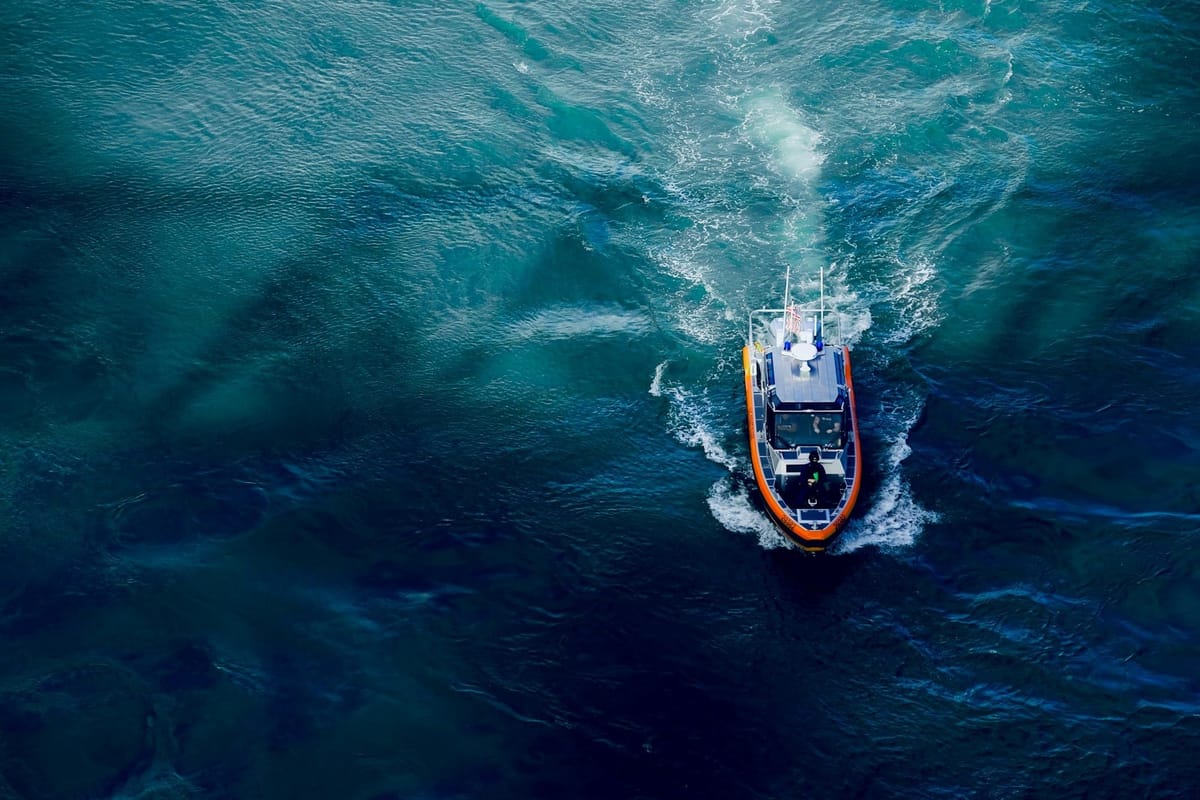
Photo by Johnyvino / Unsplash

In 2017, the United Nations General Assembly proclaimed a Decade of Ocean Science for Sustainable Development, running from 2021 to 2030, and assigned UNESCO's Intergovernmental Oceanographic Commission to coordinate it. The ambition was stated plainly: to produce the science we need for the ocean we want. Behind that phrase is a more specific diagnosis. Ocean science has historically been fragmented, underfunded relative to the scale of the systems it studies, and poorly connected to the policy and financial decisions that determine ocean outcomes. The Decade is an attempt to change that connection, not by conducting science directly, but by coordinating the global scientific community around shared objectives and making the resulting knowledge more useful to governments, businesses, communities, and to capital markets.

The framework organizes its ambitions into seven outcomes for 2030: a clean ocean, a healthy ocean, a productive ocean, a predicted ocean, a safe ocean, an accessible ocean, and an inspiring ocean. Those outcomes are pursued through ten Ocean Decade Challenges covering pollution, biodiversity, sustainable food, sustainable ocean economy, climate, coastal risk, observing systems, digital ocean infrastructure, capacity development, and reconnecting society with the ocean. The structure is deliberately broad. The Decade is a coordination platform, not a delivery program. It does not fund research directly in the way a national science agency does. It endorses actions proposed by governments, institutions, and partnerships, provides a global framework within which those actions can connect to each other, and attempts to ensure that the knowledge produced is designed with users in mind from the outset rather than translated for policy after the fact.

By June 2024, the Decade had endorsed 56 programs, 401 projects, and 99 contributions across 66 countries, established 39 national decade committees, and supported more than 29,700 capacity development initiatives reaching roughly 260,000 individuals. The Barcelona Ocean Decade Conference in 2024, attended by more than 2,600 participants from over 120 countries, marked the halfway point and produced a statement orienting the second half toward more direct connections between ocean knowledge and decision-making. A Vision 2030 process completed in 2024 generated ten white papers, one for each Decade Challenge, identifying data gaps, infrastructure needs, and practical indicators for progress.

Canada's participation runs through several channels. Fisheries and Oceans Canada describes its contribution across four pillars: science and knowledge, infrastructure and innovation, partnership and governance, and policy and strategy alignment. Canada committed up to $9.5 million in 2018 to support the Decade, announced before it formally began. Specific Canadian-linked actions include a Coastal Environmental Baseline Program focused on open, standards-compatible coastal ecosystem data with Indigenous and community partnerships; a Canadian Ocean Climate Simulation creating high-resolution modelling for Canada's three ocean coasts; and Blue Carbon Canada, led by the University of Victoria and running through 2028, assessing Canada's blue carbon habitats including salt marshes, seagrass, kelp, and seabed carbon. The last of those connects directly to the blue carbon financing questions that several posts on this site address from the capital allocation end.

The finance connection is real but still developing. The Decade is not primarily a finance initiative. Its most direct bridge to capital markets is the Ocean Decade Corporate Data Group, created by IOC-UNESCO and the marine survey company Fugro, which works with marine industries including energy, telecommunications, fisheries, and marine contractors to make privately held ocean data publicly useful. The stated rationale is that companies gain better models, forecasts, and ESG performance visibility while contributing to the public data commons that the broader ocean economy depends on. In 2025, the finance conversation became more explicit through initiatives including the Ocean Investment Protocol and engagement by UNEP's Finance Initiative around the Blue Economy and Finance Forum. The direction is toward making ocean knowledge more decision-ready for the institutions allocating capital to ocean-adjacent sectors.

UNESCO's independent mid-term evaluation, published in 2025, assessed the Decade at its halfway point and generated recommendations for the second half. The honest reading of the evaluation is that the Decade has succeeded as a coordination movement and has not yet demonstrated measurable improvement in ocean health outcomes. That gap is not a surprise and should not be read as failure. Building the coordination infrastructure, the national committees, the endorsed action framework, the shared data strategy, the global community of practice, is the necessary precondition for the second half to deliver anything. A coordination platform that did not exist five years ago now exists and is functioning. Whether it produces the outcomes its seven ambitions describe by 2030 depends on how effectively the second half connects that coordination to real decisions.

The realistic expectation for 2030 is not that the Decade will have reversed ocean decline. Ocean systems respond to pressures accumulated across decades and will not be restored by a ten-year coordination initiative, however well designed. The more achievable and more useful contribution is making ignorance less defensible. Better global coordination of ocean science, expanded open data and digital ocean infrastructure, stronger observing systems and forecasting capacity, and ocean knowledge that is more directly usable in coastal risk assessment, biodiversity reporting, blue carbon accounting, and financial disclosure all represent progress that compounds beyond 2030. The Decade's value, if it is realized, will be in lowering the information costs that currently make ocean-linked financial decisions harder to make well.

For blue finance specifically, the Decade matters because capital allocation depends on reliable data, credible baselines, and outcome measurement that can be verified. The instruments being developed in blue finance, sustainability-linked loans, blue bonds, conservation finance structures, ocean-linked lending criteria, are only as credible as the science and data systems that underpin them. A Decade that strengthens those systems, even incrementally, changes what can be priced, protected, funded, insured, restored, and held accountable. That is a modest claim relative to the ambition of the seven outcomes. It is also a realistic one, and realism about what a coordination platform can accomplish in ten years is more useful than either dismissal or overstatement.