What is Blue Finance?
Financing an ocean industry is not the same as blue finance. What the term covers, where its boundary sits, what the major frameworks refuse to fund, and how far Canada has got.

Blue finance is the practice of putting the condition of the ocean inside a financial decision, through lending, investment, insurance, and the instruments built for the purpose. It covers capital directed at ocean and water outcomes, and it also covers the ordinary financing of ocean-dependent industry where that dependency is measured and priced. Financing an ocean industry is not by itself blue finance. It becomes blue finance when the state of the water changes the decision.
Blue finance is about connecting money to the health of the ocean. It covers loans, bonds, insurance policies, and investment decisions that depend on or affect ocean, coastal, and freshwater systems. It takes the long view of what those decisions do to the water. Every year, trillions of dollars flow into industries that need a working ocean, including fishing, shipping, aquaculture, offshore energy, coastal tourism, and the marine technology that supports them. The ocean makes all of it possible. In many of those financial decisions, however, its health is taken for granted. Blue finance is the work of closing that gap.
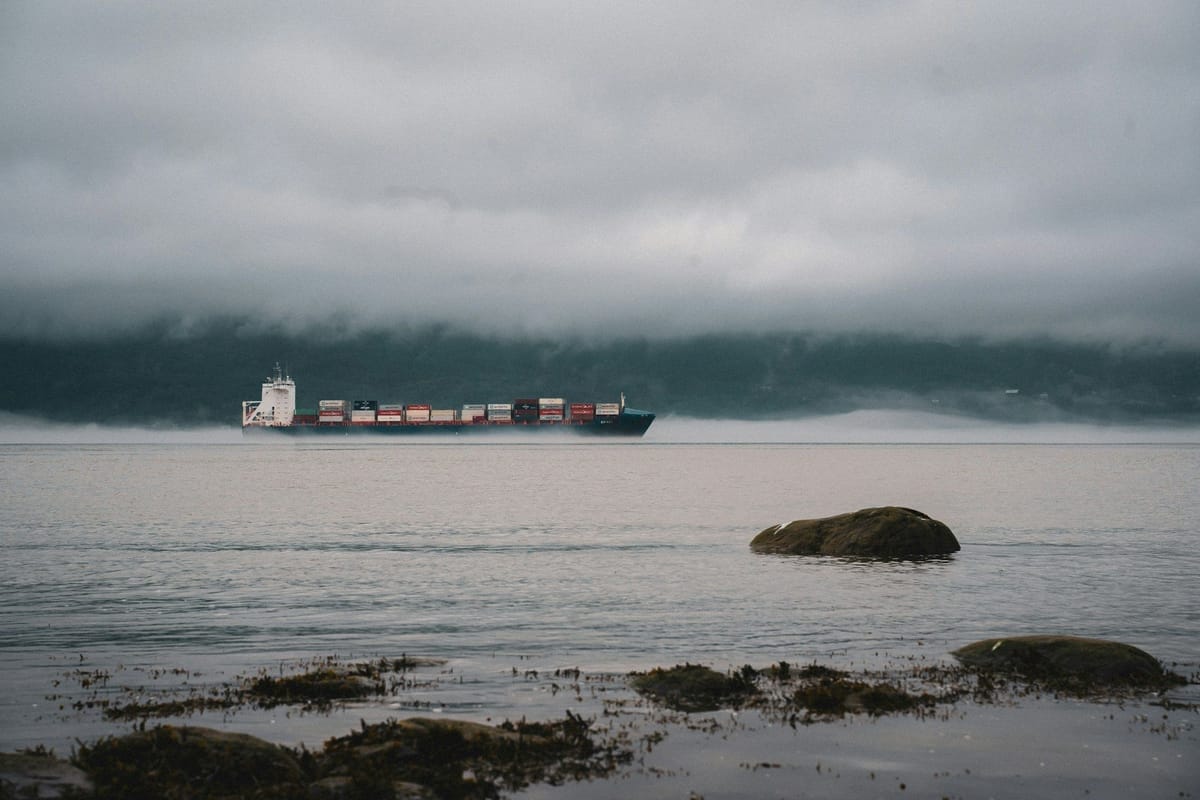
Which means that financing something in the ocean economy does not by itself make it blue finance. A bank that lends against a container ship has financed an ocean industry. It will have analyzed the trade routes, the charter rates, the emissions rules coming at the borrower. It has not necessarily asked one question about the health of the ocean itself. The loan becomes blue finance when the condition of the water enters the decision, either as a dependency the borrower relies on, a consequence the borrower creates, or an outcome the money is meant to produce. That is a higher bar than it sounds, and ordinary commercial lending into the ocean economy is not built to clear it.
Finance and the natural world are not two separate systems that occasionally touch. They are one system. Every loan to a fishing fleet, every bond that funds a port, every insurance policy written on a coastal property is already a bet on the condition of the ocean, whether we think of it that way or not. Blue finance is the attempt to put the ocean's health inside the decision instead of outside it.
The industries that make up the ocean economy depend on marine systems that are under measurable and, in some cases, accelerating pressure. Overfishing, pollution, habitat loss, ocean acidification, and a warming climate are all reducing what those systems can do. The systems that fund and expand those industries were not built to take account of that pressure. A company's financial statements have no line for the health of a fishery. The models a bank uses to decide who gets a loan have nowhere to put the state of a coastline.
The term 'blue finance' came out of a broader shift in how banks, development agencies, and governments think about money and environmental outcomes. Green finance established much of the foundation between 2007 and 2014, from the first green bonds to an agreed set of rules for tracking where the money went and reporting what it did. Climate and the energy transition became green finance's main focus. Blue finance grew up around what that focus left out, the particular risks and outcomes tied to the ocean and the coast. The Seychelles blue bond, issued in 2018, is widely cited as the deal that showed the idea could work in practice and not only on paper.
The precise definition of blue finance is still being argued over, and the argument is worth knowing about because the institutions working in the field do not all mean the same thing by it, and most of their other disagreements follow from that. The World Bank builds its definition around growth, livelihoods, and jobs. UNEP FI builds it around restoring and protecting ocean health. IFC works from a list of eligible activities and a use-of-proceeds test, so a project either qualifies or it does not. Those are three different questions, and which one an institution asks tells you what it thinks finance is for. This site uses the wider meaning. The test used here is whether a financial decision can see the natural system it depends on, which applies to an ordinary commercial loan as readily as to a labelled instrument.
ESG is a much wider umbrella than blue finance, and a wider one than the ratings it is usually associated with. ESG factors run through company scores, but also through lending policy, underwriting, and how portfolios get built, weighing environmental, social, and governance questions across every industry there is. Blue finance asks a narrower question about one system. Does this financial decision support or undermine the long-term health of the ocean and the coast?
The relationship to green finance is important, but the two are not the same thing. Green finance covers a wide range of environmental goals, although climate and the energy transition have dominated it. The ocean enters that picture where it stores carbon, as blue carbon habitats like mangroves, seagrasses, and salt marshes do. Ocean health involves far more than carbon. How fisheries are governed, marine biodiversity, plastic pollution, the noise ships make, coastal habitat, the rivers that drain into the sea, and Indigenous stewardship of marine territories all sit within the scope of blue finance and largely outside the scope of green finance. In practice, though, blue finance runs on green finance's plumbing. IFC's Guidelines for Blue Finance, first published in 2022 and updated in 2025, start from the eligible categories in the Green Bond Principles and Green Loan Principles and map blue activities onto them. What blue finance adds is not separate machinery. It is a set of ocean-specific questions and eligibility tests that green finance does not ask.
A loan might be reviewed every year while rebuilding a fishery takes decades. Blue finance tries to connect those different clocks. A lender financing a fishing company might, for example, make lower borrowing costs conditional on the company staying within scientifically established catch limits or reducing its bycatch. The company cannot control whether the fishery rebuilds, but it can control how it fishes.
The names sound technical, though the idea inside each one is simple. Connect the money to the outcome. Blue bonds raise money that is set aside for ocean projects, and the borrower has to report on where it went and what it produced. Debt-for-nature swaps let a country rework debt it already owes in exchange for promises to spend on conservation or to expand its protected waters. Blended finance puts public or charitable money alongside private investment to make projects possible that private investors would not fund on their own. Sustainability-linked loans tie the interest rate a borrower pays to environmental targets, which is what the fishing company example describes. Each one reflects a different theory of how money connects to what happens in the water.
What does blue finance refuse to finance?
Every lender I worked for carried a list of industries it would not finance, ten or fifteen names, and the board reviewed that list every year. A director asked me once whether the list was my moral judgement on those industries, which was a fair question, and the answer was no. Most of the names were there because FINTRAC had flagged the sector as needing enhanced monitoring, and monitoring costs money and people. We had more than enough opportunities among borrowers who did not require that intensity, so what looked like a judgement was a question of capacity. The rest were on the list for reputation, firearms and weapons among them, and those were ones we could agree the association was not something we would be proud of.
Environmental harm did make the list, where an industry did enough damage that financing it was a problem for us. We could have drawn that category wider. The question we did not ask was whether our borrowers were taking more out of the natural world than it could replace, or putting something into it on the way through that nobody was counting. A soap with plastic granules in it works fine for the customer, but the granules wash into the ocean afterward as microplastics. That never came up in a credit review, and it would not have occurred to me to raise it.
UNEP FI's Recommended Exclusions, which grew out of its 2021 Turning the Tide guidance, is the closest thing the field has to that wider category. It works sector by sector through the ocean economy and names activities a signatory should decline to finance rather than manage, including blast and cyanide fishing, catching species on the IUCN Red List, and carrying heavy fuel oil in Arctic waters. The language is blunt in a way finance documents usually are not, and it is built like a prohibited industry list, which is a form every credit committee in the country already knows how to use.
Where the boundary sits is still contested, including among the people drawing it. UNEP FI keeps deep-sea mining, offshore oil and gas, and dredging out of the exclusions list, handling them instead through separate briefing papers on harmful marine extractives. The 2023 blue bond guidance from ICMA and its partner institutions takes the harder line and rules non-renewable marine extraction out altogether. UNEP FI worked on both, and they have not landed in the same place. So if some ocean-economy activity should not be financed at all, blue finance cannot simply mean money that reaches the ocean economy, and where an institution draws that line tells you more about what it means by the term than any label on a bond does.
What blue finance cannot do matters as much as what it can. It cannot substitute for regulation, and a blue bond issued by a fishing company does not guarantee sustainable fishing any more than a green bond issued by an energy company guarantees lower emissions. An instrument is only as good as the standards it is measured against, the care taken in checking the results, and whether the promises attached to it can be enforced. Where those are weak, blue finance becomes a labelling exercise instead of a mechanism for change. That work is underway and unfinished, and how well it is done will decide whether any of this means anything.
It cannot replace the rules either. Catch limits, marine protected area designations, pollution controls, and Indigenous rights frameworks set the terms, and no financial instrument gets to work outside them. Money can reinforce good governance and make it more durable. It cannot stand in for governance that is absent or badly designed.
What does blue finance look like in Canada?
Blue finance in Canada is young. The Blue Register, the monthly measure this site keeps of how far the field has developed here, puts it in the Emerging stage, the second of five. Our three oceans hold some of the world's most significant marine environments and support industries whose future depends on the health of those environments.
The numbers that exist are new. Statistics Canada published the first monetary valuation of Canadian ocean and coastal ecosystem services in January 2026, $7.1 billion for 2023, covering carbon sequestration, wild fish and seafood, and nature-based tourism. The Bank of Canada's quarterly series on chartered bank lending by industry carries a line for fishing and trapping, $1.414 billion at the first quarter of 2026, against $58.983 billion for agriculture. I have not found either figure in a Canadian supervisory document.
Blue finance is only beginning to engage a system that already exists. Banks and funds finance the ocean economy, governments regulate it, and Indigenous nations hold rights and governance authority across large portions of Canada's marine territory. Money already reaches the ocean economy through institutions whose mandate was never framed in ocean terms. The work now underway, from Indigenous-led conservation finance on the Pacific coast to blue carbon projects in Atlantic Canada, shows what blue finance looks like when it moves from principle to practice.
The money changes the water, and the state of the water will, in time, change the money. That is the work this site is built around, and it is what evolving finance for a living ocean means in practice.
If you are new here, start here for the full map of the site, or go straight to the full collection of essays
Last reviewed: August 2026