How Antarctica Is Governed (Without a Government)
Antarctica is the one place where governments negotiated a full regime for mining, spent six years on it, and then walked away and banned the activity instead.

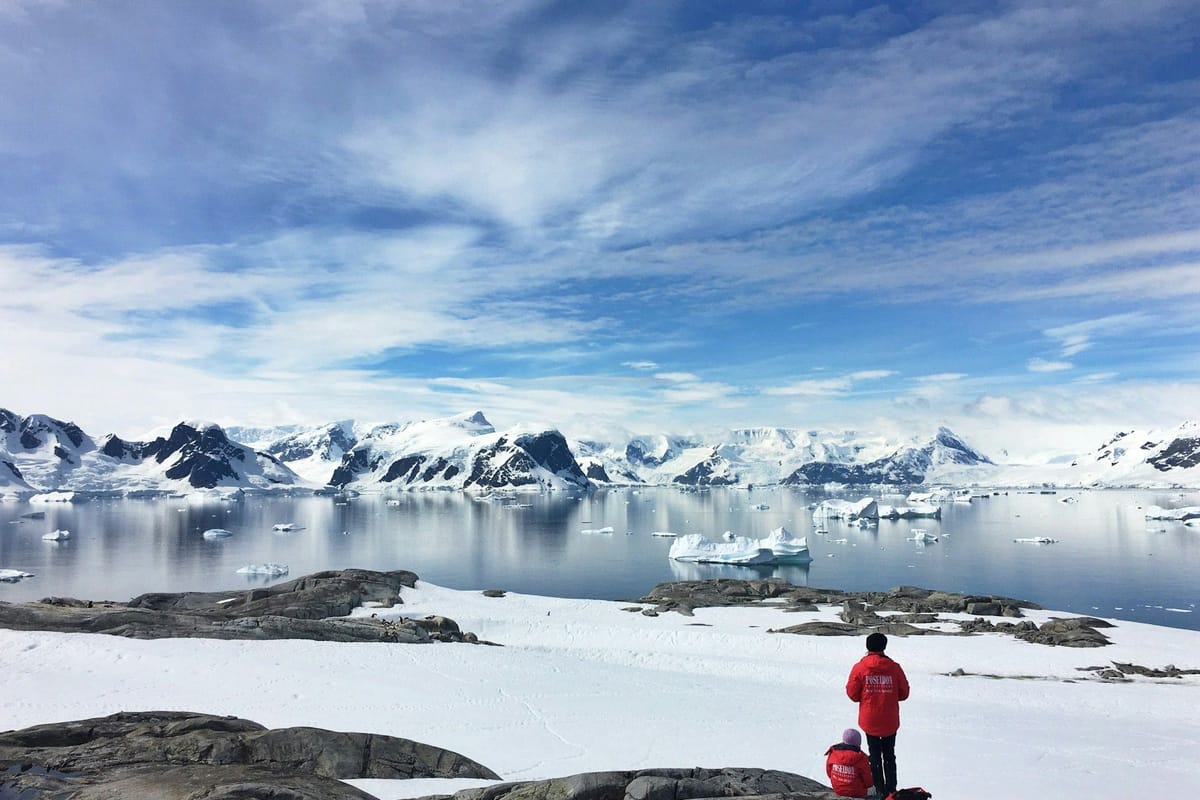
On December 1, 1959, twelve countries signed a treaty in Washington that set their competing claims to Antarctica aside without settling any of them. Seven of the twelve claimed territory on the continent, including Argentina, Chile, and Britain, whose claims overlapped each other. The treaty froze those positions, banned military activity and nuclear tests, opened the continent to scientific research, and required the parties to tell each other what they were doing there. Any party may inspect any other party's stations, ships, and equipment, with advance notice, and that right has been exercised regularly since.
Decisions under the treaty are made by consensus among the consultative parties, which now number twenty-nine. A single government can stop anything, and what has been stopped is a matter of record.
Minerals came up first in Wellington in 1972, when the parties agreed that mining in Antarctica was probably feasible and would need rules. Negotiations to write those rules began in 1982 under the chairmanship of Chris Beeby, a New Zealand lawyer and diplomat, and ran through twelve sessions in various cities over six years. What came out of them was the Convention on the Regulation of Antarctic Mineral Resource Activities, adopted at Wellington in June 1988, on the premise that mining could be made compatible with protecting the Antarctic environment if it were governed carefully enough. Britain supported it, as did most of the parties who had spent six years drafting it.
On May 22, 1989, the Australian Prime Minister, Bob Hawke, announced that Australia opposed mining in Antarctica and would not sign the convention it had helped negotiate. Michel Rocard took France the same way. Both countries were claimant states, and without them the convention could not enter into force. Nineteen states signed it and none ratified it.
What replaced it was drafted quickly by the standards of the previous decade. The parties met at Viña del Mar in Chile in late 1990 and three times in Madrid through 1991, and adopted the Protocol on Environmental Protection on October 4, 1991. It entered into force on January 14, 1998. Article 7 runs to a single sentence: "Any activity relating to mineral resources, other than scientific research, shall be prohibited". There is no time limit on it.
The belief that the ban expires in 2048 is common enough that the Antarctic Treaty Secretariat has published a correction, and the consultative parties adopted a resolution at Santiago in 2016 restating that the Protocol does not expire. What Article 25 actually provides is that fifty years after entry into force, which falls in 2048, any consultative party may request a conference to review how the Protocol is working. Changing the mining prohibition would then require a majority of the parties including three quarters of those who were parties in 1991, and ratification by three quarters of them including all of the original group. Article 25 adds one more condition, which is that even after all of that, mining could not begin unless a binding legal regime governing Antarctic mineral resource activities was already in force.
Such a regime was written once. It took six years, two governments walked away from it, and nothing has replaced it since, so any future decision to allow mining in Antarctica would have to begin by rebuilding what was abandoned in 1989. An entire class of extraction was removed from the investable future of a continent by treaty, after the rules that would have permitted it had already been drafted and adopted.
The Southern Ocean is governed separately, under the Commission for the Conservation of Antarctic Marine Living Resources, which was created in 1982 and meets each October in Hobart. Twenty-four countries and the European Union sit at that table and it also runs on consensus. In 2009, on a proposal from the United Kingdom, it agreed its first marine protected area lying entirely in the high seas, 94,000 square kilometers on the southern shelf of the South Orkney Islands, and committed to building a representative network across the Southern Ocean.
The United States and New Zealand tabled a joint proposal for the Ross Sea in 2012, merging two separate ones at the last minute. China and Russia blocked it, year after year, on grounds that came back to fishing access. China dropped its objection in 2015 after talks that reached the level of the US Secretary of State, and Russia followed in 2016. The commission agreed the area that October at 2.09 million square kilometers, the largest marine protected area in the world, with 72 percent of it closed to fishing, and it came into force on December 1, 2017. Getting it through required a time limit. The conservation measure runs to the end of its review period in 2052, at which point the commission may renew it, modify it, or let it end.
Three further proposals have not made it. The Weddell Sea area, at 1.8 million square kilometers, was blocked by Russia, China, and Norway in 2018 and has been blocked since. An East Antarctic area was first proposed in 2012 and an Antarctic Peninsula area by Chile and Argentina in 2017, and the scientific committee has endorsed the science behind them. None of them was adopted at the 2025 meeting in Hobart. Together with what already exists they would cover about 26 percent of the Southern Ocean.
The krill fishery operates under a trigger level of 620,000 tonnes for the Atlantic sector, and for years a measure called Conservation Measure 51-07 divided that catch across four subareas so the fleet could not take it all from one place, allocating 155,000 tonnes to the waters off the Antarctic Peninsula and the rest further east. In 2024 the members could not agree to renew it and the measure expired. The following season the fleet fished where the krill were densest, in the Peninsula subarea, where penguins, seals, and whales feed on the same swarms. The fishery reached its limit and closed early for the first time in its history. At Hobart in 2025 a proposal to replace the lapsed measure did not reach consensus either.
No one blocked that measure. It came to its expiry date and the members could not agree to renew it, so it ended. Consensus works differently depending on what is already in place. The mining prohibition continues unless the parties agree to change it. A protection that expires, as the krill measure did, disappears unless they agree to renew it.