Shipbuilding and Naval Infrastructure: Why Canada's Shipbuilding Ambitions Outrun Delivery
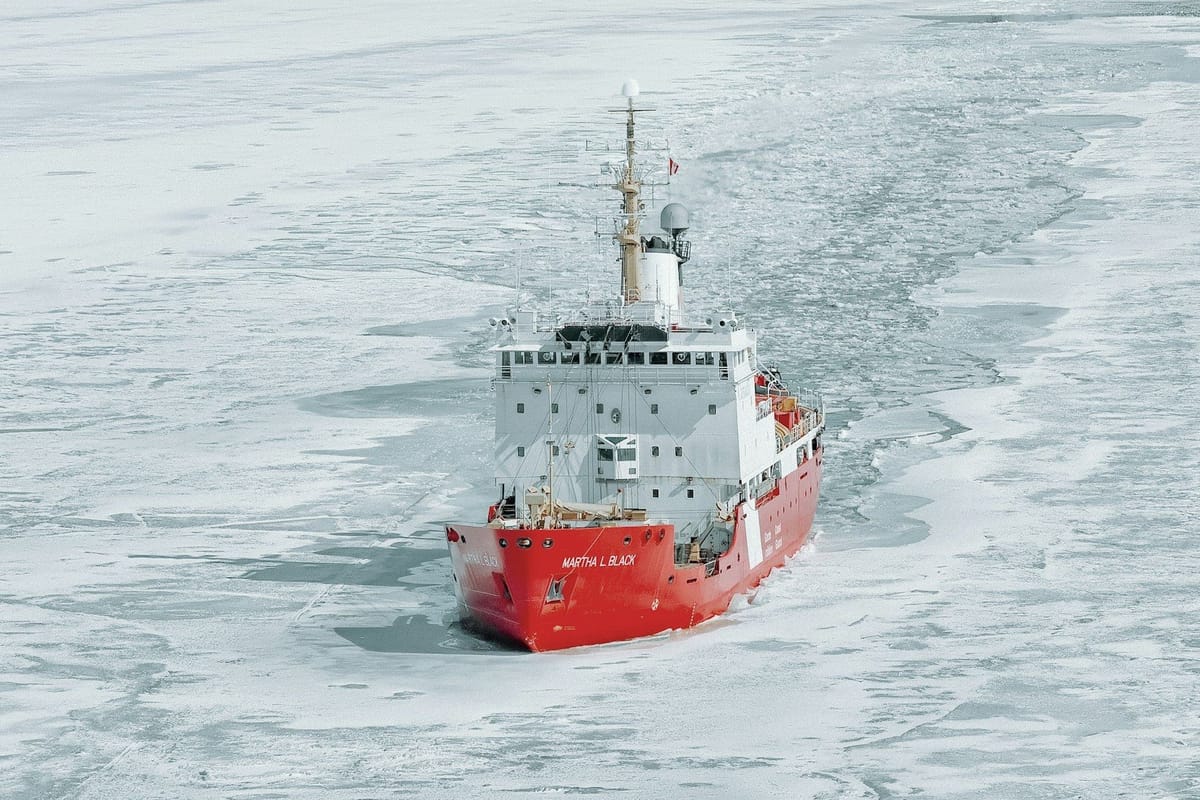
In 2020, Canada chartered a foreign icebreaker for Arctic search and rescue while promoting a multi-billion dollar domestic icebreaker program as evidence of sovereignty. Both things were true simultaneously. That is the central tension in Canadian shipbuilding policy.

In 2020, Canada chartered a foreign icebreaker to support Arctic search and rescue operations because its own Arctic capability was insufficient for the task at hand. At the same time, the federal government was promoting a multi-billion dollar domestic icebreaker building program as evidence of Canada's commitment to Arctic sovereignty. Both things were true simultaneously. The chartered vessel filled an operational gap. The domestic program remained years from delivery. That moment, unremarkable in the day-to-day management of a complex procurement portfolio, captures the central tension in Canadian shipbuilding policy with unusual clarity.
The gap between what Canada says about its maritime sovereignty and what it can actually deploy in the water is not a temporary condition produced by a single procurement failure. It is a structural feature of a system that has consistently prioritised the long-term goals of domestic industrial policy over the near-term requirements of operational readiness. Understanding why that choice was made, what it has produced, and what it costs is the most important analytical task in Canadian naval and shipbuilding policy.
The National Shipbuilding Strategy was built on a legitimate industrial policy argument. Canada had allowed its shipbuilding capacity to atrophy through decades of irregular procurement, and rebuilding it required a sustained commitment to domestic construction that the market would not have produced on its own. The umbrella agreements with Irving, Seaspan, and eventually Davie provided exactly that commitment, giving yards the certainty they needed to invest in facilities, train workforces, and develop supply chains. On those terms the NSS has succeeded. Canada now has three anchor yards with genuine large-vessel capability, approximately 10,000 shipbuilding workers earning well above manufacturing average wages, and a domestic industrial base that did not meaningfully exist fifteen years ago.
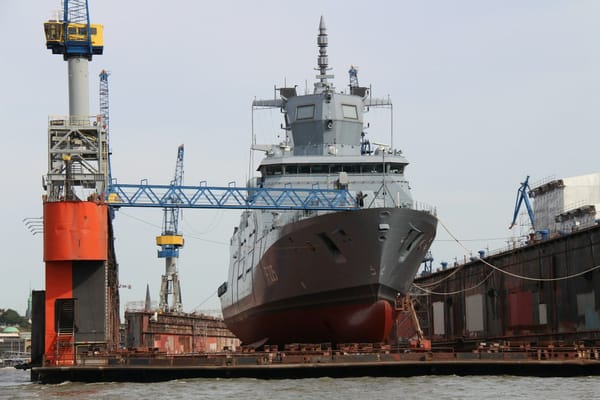
What the NSS has not produced, at least not yet, is a navy and Coast Guard equipped with the vessels they need to execute their operational mandates. The Royal Canadian Navy retired its destroyers without replacement, operating its smallest surface fleet in decades while waiting for the Canadian Surface Combatant program to deliver. The first CSC will not be in service until approximately 2038. The Coast Guard's icebreaker fleet has aged past its intended service life, with vessels maintained beyond their design parameters while new builds move through a procurement process measured in decades rather than years. The Auditor General observed in 2021 that NSS programs were facing significant risks and that there was little room for further delay, a warning that has been repeated in various forms across multiple oversight reviews without producing fundamental changes to how the programs are managed.
The global comparison is instructive and honest. Canada is not uniquely incompetent at naval shipbuilding. Australia's SEA 5000 program for future frigates has faced its own delays and cost pressures. The United Kingdom's Type 26 and Type 31 programs have slipped. The United States has experienced significant cost overruns on its own Coast Guard polar icebreaker program. Complex naval procurement is genuinely difficult, and every country that attempts it domestically pays a premium for the industrial policy benefits that domestic construction provides. What distinguishes Canada's situation is the scale of the gap between sovereign ambition and operational reality relative to the country's size, coastline, and stated Arctic commitments.
Russia operates more than forty icebreakers including nuclear-powered vessels capable of year-round Arctic operations. The United States is building new heavy icebreakers but currently has only two polar-capable vessels. Canada is planning two heavy polar icebreakers and six medium icebreakers under the NSS, which when delivered will give it a significantly enhanced Arctic capability. The critical word is when. The polar icebreakers are only now entering detailed design and early construction phases. The medium icebreakers contracted to Davie are in the early stages of a program that will extend well into the 2030s. In the intervening period, Canada's Arctic operational presence depends on vessels that were built for a previous era and are being maintained past their intended service lives through refit spending that adds cost without adding capability.
The sovereignty argument for domestic shipbuilding is not wrong. A country that cannot build its own naval vessels is dependent on foreign suppliers for the hardware that underpins its defence and maritime operations, a dependence that carries strategic risk in a world where supply chains are increasingly contested. Canada's choice to accept higher costs and longer timelines in exchange for domestic industrial capability is a legitimate policy choice that successive governments have found worth making. The honest question is whether the choice is being executed well enough to deliver on its own stated objectives.
The Auditor General's findings suggest it has not been, consistently and repeatedly. Governance gaps, inadequate risk assessment, unrealistic scheduling, and the tendency to reallocate work between yards to manage short-term industrial policy objectives at the expense of program coherence have produced a pattern of delay and cost escalation that the NSS was explicitly designed to avoid. The gap between political announcement and operational delivery has become so familiar that it functions almost as a feature of the program rather than a bug, absorbed into planning assumptions and rarely examined honestly in public communications.
Against that backdrop, the 2026 acquisition of Genoa Design International by Membertou First Nation and Horizon Naval Engineering stands as the most structurally interesting development in Canadian shipbuilding in years. Genoa Design is a naval architecture and engineering firm with active relationships across NSS programs. Membertou's ownership of it is not a workforce training initiative or a subcontracting arrangement. It is direct ownership of professional capability embedded in a procurement ecosystem that will remain active for decades. The community will earn professional service revenue, build institutional knowledge in naval engineering, and participate in program decisions rather than simply executing work within them. It is a model of Indigenous participation in defence procurement that is qualitatively different from what existed before and that other communities and procurement officials are watching closely.
The delivery gap in Canadian shipbuilding is real, well documented, and unlikely to close quickly. The industrial policy goals of the NSS are legitimate and have produced genuine results. The tension between those two facts is the defining dynamic of the sector and one that will persist regardless of which government manages it, because it is structural rather than political. What changes over time is whether the gap between ambition and delivery is managed with more honesty and better governance than it has been managed so far.