Coastal Tourism: The Industry

On a summer morning in Victoria, a cruise ship docks at Ogden Point. A whale watching company loads twelve people onto a rigid inflatable. An Indigenous-led cultural tour is about to begin. All three are coastal tourism. Almost nothing else about their economics is the same.

Share
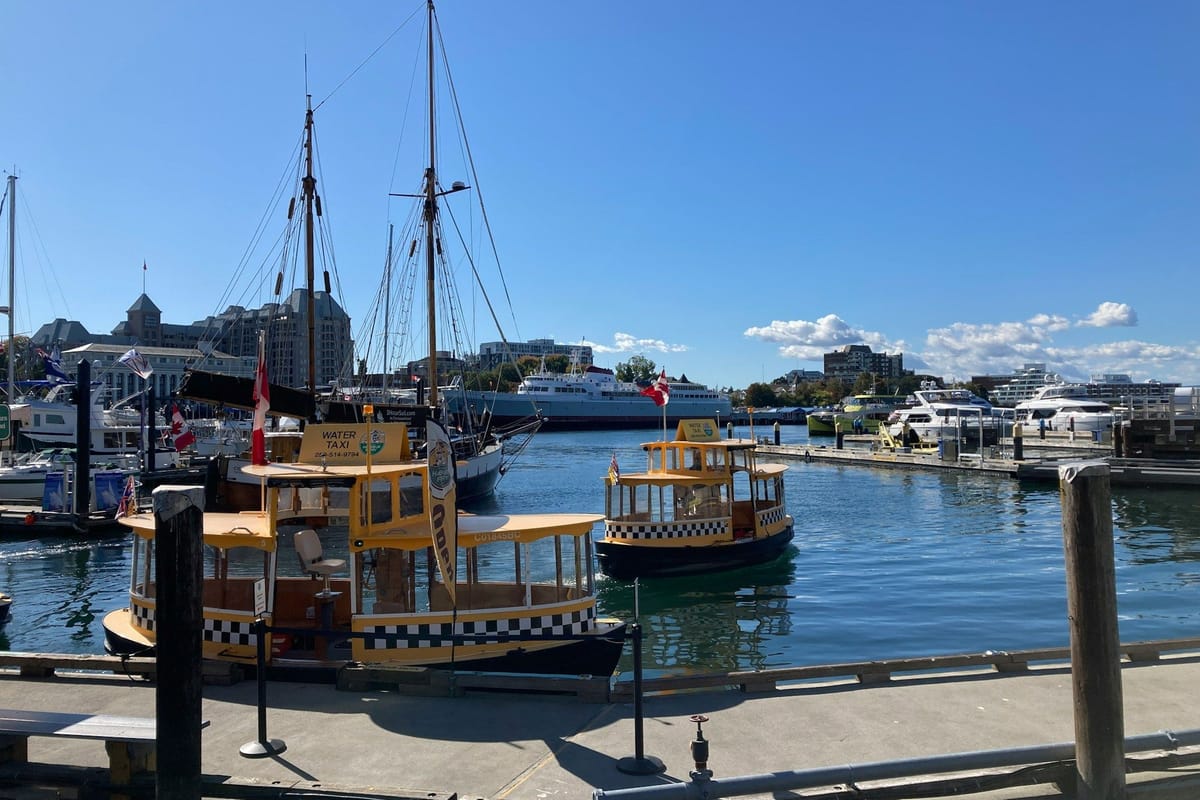
Yellow water taxis and sailboats moored in Victoria’s Inner Harbour beneath a clear blue sky.
Photo by Ronin / Unsplash

On a summer morning in Victoria, British Columbia, a cruise ship carrying several thousand passengers docks at Ogden Point. Within walking distance, a family-run whale watching company is loading twelve people onto a rigid inflatable boat. A few blocks away, an Indigenous-led cultural tour is about to begin at the waterfront. All three operations are part of Canada's coastal tourism industry. They share a harbour, a season, and a dependence on the same coastal environment. Almost nothing else about their economics is the same.
That fragmentation is the defining structural feature of Canadian coastal tourism. It is not one industry but a collection of overlapping sectors operating at vastly different scales, with different ownership models, different capital requirements, different environmental footprints, and different relationships to the communities they operate within. Understanding it requires holding that complexity rather than reducing it to a single narrative about economic benefit or environmental harm.

Canada's coastal and marine tourism encompasses cruise tourism, whale watching and wildlife tours, recreational boating and marinas, sport fishing, coastal resorts and hospitality, adventure and ecotourism, Indigenous cultural tourism, and Arctic expedition travel. The sector as a whole operates within Canada's broader tourism economy, which contributed roughly CAD 130 billion to GDP in pre-pandemic terms and involves approximately 265,000 businesses nationwide. Much of that activity is concentrated in coastal regions. Vancouver Island alone generated approximately CAD 1.9 billion in visitor spending in 2023 from nearly five million overnight visitors. Summer 2025 tourism spending nationally reached CAD 59 billion, led by strong domestic demand.

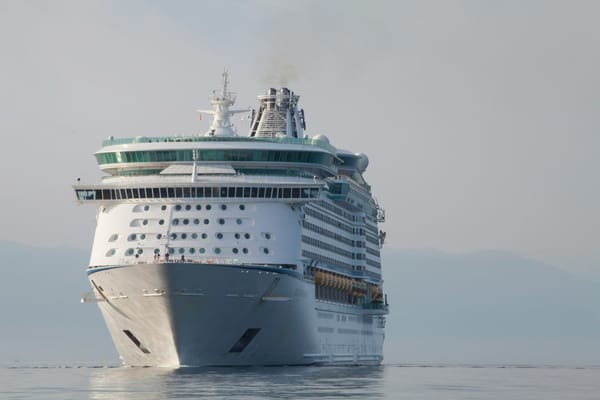
Cruise tourism is the most visible and most economically concentrated segment. In 2025, Canada received approximately 1.9 million cruise passenger arrivals, with 81 percent entering through British Columbia, primarily Vancouver and Victoria, and 18 percent arriving at Atlantic ports including Halifax and Saint John. About 80 percent of cruise visitors were US residents. Victoria's Ogden Point handled approximately 970,000 cruise passengers in 2024 alone. The economics of cruise tourism are distinctive: the revenue generated ashore through excursions, retail, and food and beverage is significant, but the ships themselves are owned by global corporations, the onboard spending stays with the cruise line, and the capital investment in vessels runs into the hundreds of millions of dollars per ship. Cruise Lines International Association member companies including Carnival, Royal Caribbean, and MSC dominate the Canadian market, operating on a scale that no domestic tourism operator approaches.

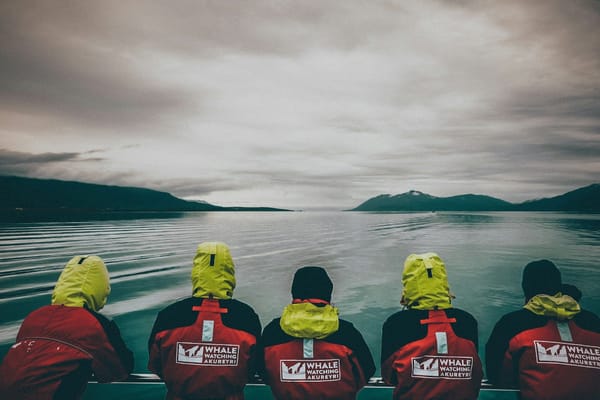
The wildlife and nature tourism segment operates at a completely different scale. The Pacific Whale Watch Association, whose member operators work the Salish Sea in British Columbia and Washington State, serves roughly 400,000 passengers annually across a fleet of small vessels ranging from rigid inflatables to covered tour boats. These are mostly small businesses operating one or two vessels, earning revenue through per-passenger tour fees across a season that runs roughly May through October. Recreational boating and marinas add another significant layer: a 2016 analysis found Canada's core boating sector generated approximately CAD 4.9 billion in revenue and supported 45,000 direct jobs, with total economic output including indirect effects reaching approximately CAD 5.6 billion.

Indigenous tourism has become one of the more significant and structurally distinctive segments of the Canadian coastal economy. A 2022 estimate put Indigenous-owned tourism at approximately CAD 1.7 billion in GDP contribution and 32,000 jobs nationally. The Indigenous Tourism Association of Canada supports entrepreneurs across the country in developing cultural, culinary, and nature-based experiences rooted in traditional knowledge and stewardship practice. In British Columbia, First Nations-guided spirit bear ecotours, Haida cultural experiences on Haida Gwaii, and Nuu-chah-nulth canoe tours on Vancouver Island represent a model that connects visitor revenue directly to community economic development and cultural continuity. On the St. Lawrence, Indigenous-led experiences are increasingly integrated into cruise itineraries, reaching visitors who would not otherwise encounter them.

Arctic expedition tourism is the smallest segment by volume but one of the fastest-growing globally. Statistics Canada reported approximately 5,600 Arctic cruise passengers in 2025, up from 4,400 in 2019. These are typically high-income travellers on small ice-strengthened expedition vessels visiting Nunavut communities, wildlife viewing sites, and Northwest Passage routes during the brief summer navigation window. The economics are niche, the environmental sensitivity is extreme, and the infrastructure is almost entirely absent in any conventional sense. Churchill, Manitoba, which sits on Hudson Bay rather than the ocean but draws international visitors for polar bear and beluga whale viewing, illustrates what small-scale northern wildlife tourism looks like when it works: a global reputation built around a highly specific seasonal phenomenon in a community with almost no other economic drivers.

What holds this fragmented system together is the coastal environment itself. The clean water, abundant wildlife, dramatic scenery, and cultural richness that draw visitors to Canada's three ocean coastlines are the shared asset on which every segment depends. That shared dependence is also the sector's central tension, because the activities that generate tourism revenue can degrade the very conditions that make those revenues possible. That tension runs through everything that follows in this series.