Who Pays for Marine Protected Areas
Canada has spent hundreds of millions establishing marine protected areas. The harder question is whether the funding and governance behind them are built to last as long as the protection itself.
Blue Finance Canada archive
Essays, analysis and explainers from across Blue Finance Canada, arranged from newest to oldest.
78 published essays
Canada has spent hundreds of millions establishing marine protected areas. The harder question is whether the funding and governance behind them are built to last as long as the protection itself.
Not all ocean protection is equal. Less than half a percent of Canadian waters are strongly protected; the rest is a patchwork of partial restrictions across three federal departments and a fourth, looser category. A designated area without staff, budget, and monitoring is just a boundary on a map.
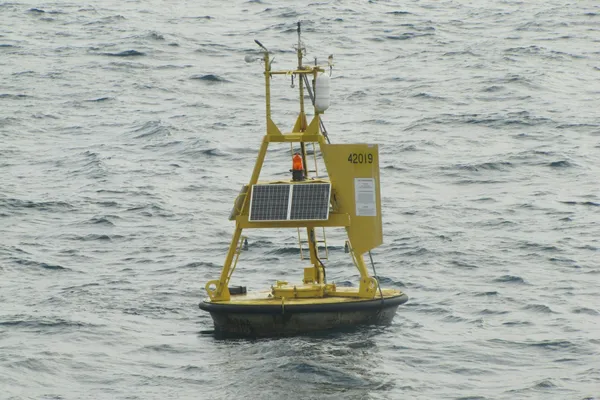
More than 120,000 ocean observations flow into global forecasting systems every day, coordinated by a UNESCO body few could describe with precision. The data it maintains is what coastal risk models, catastrophe pricing, and blue finance rely on.
The UN Ocean Decade runs from 2021 to 2030 with seven ambitious outcomes. Its real contribution is narrower and more useful: making ocean ignorance less defensible, and lowering the information costs that make ocean-linked financial decisions hard to make well.
Canada has strong Atlantic wind, deep harbours, a skilled offshore workforce, and a US export market next door. What it does not have is an operating turbine, a financed project, or settled transmission. The gap to a working wind farm is measured in years.
Offshore petroleum and offshore wind are not two versions of the same business. One runs on corporate balance sheets and a track record; the other is still a projection waiting on transmission, offtake, and a first licensing round. Decommissioning is the long-tail cost most discussion underweights.
Newfoundland produces the oil. Nova Scotia is betting on wind it has not yet built. The Pacific is closed by moratorium and surrendered permits, and the Arctic is on indefinite hold. Canadian offshore energy in 2026 is less a national industry than four separate situations.
Between 2014 and 2016 a mass of unusually warm water settled across the northeast Pacific, and coastal communities paid for it in closures, lost seasons, and work that did not come back. The ocean economy is wider than it looks.
Kelp grows up to half a metre a day and builds underwater forests that rival reefs for biodiversity. Along the BC coast, marine heatwaves, sea star disease, and exploding urchin populations are turning those forests to bare rock.
Mangroves grow where no other tree can, rooted in salt water and oxygen-poor mud. They pack several times the carbon of upland forest into the same area, blunt storm waves, and shelter young fish. Cleared, they flip from carbon sink to carbon source.
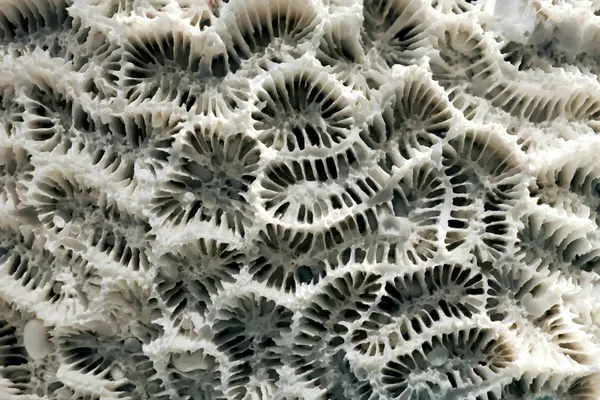
A coral reef is a living structure built by tiny animals. Algae inside the coral feed it and give it its colour. When water warms even slightly past the coral’s limit, the polyps expel the algae and turn white, and if the heat holds, they die. Standing reefs feed fisheries and blunt storm waves.
Most conservation funding runs out when the political cycle turns. The Great Bear Sea agreement was built to outlast that: $335 million, an endowment at its core, and Indigenous governance as the foundation, not the recipient.