Marine Technology and Ocean Monitoring: Science, Sovereignty, and the Commercialization Gap
Ocean data in Canada has long been treated as a public good. Three separate pressures are beginning to complicate that assumption, and together they signal that the next decade of Canadian marine technology will need to navigate questions the sector has not previously had to address directly.

Ocean data in Canada has long been treated as a public good. Government agencies collect it, academic observatories archive it, and open-access platforms make it available to researchers worldwide. That model has produced genuine scientific value. Ocean Networks Canada's decades of continuous observatory data are used by climate scientists on every continent. The Canadian Hydrographic Service's charts underpin navigation safety across three ocean coastlines. DFO's fisheries monitoring databases inform stock assessments that determine how billions of dollars of seafood is harvested each year. The public good framing is not wrong. But it is increasingly incomplete.
Three separate pressures are beginning to complicate the assumption that Canadian ocean data should simply flow freely to whoever needs it. Indigenous communities are asserting data sovereignty over observations collected in their traditional territories, arguing that data about their coastal environments should be held, governed, and shared on terms they define rather than according to the open-access conventions of international scientific networks. Commercial operators are recognising that proprietary ocean data, higher resolution bathymetry, more frequent ice observations, more precise current forecasting, has competitive value that public datasets do not fully capture, creating demand for data products that go beyond what government agencies produce. And geopolitical actors, including China's growing presence in Arctic research and Russia's assertive positioning on northern sea routes, are making Canadian ocean data a strategic asset in ways that pure scientific sharing frameworks do not fully account for.
None of these pressures has yet produced a fundamental restructuring of how Canadian ocean data is governed. But together they signal that the public good model is under strain, and that the next decade of Canadian marine technology development will need to navigate questions about data ownership, access, and sovereignty that the sector has not previously had to address directly.
The commercialisation gap sits alongside these data governance questions as the other defining challenge of the sector. Canada has built genuine world-class capability in specific niches. Teledyne CARIS dominates global hydrographic software. AML Oceanographic has been exporting precision ocean instruments for more than five decades. Ocean Sonics has established a global reputation for broadband hydrophone quality. Cellula Robotics is developing hydrogen-powered autonomous underwater vehicles with endurance capabilities that exceed most commercial competitors. Kraken Robotics has built international defence and survey contracts from a base in Newfoundland and Labrador. These are real achievements and they are not accidents. Each of these companies found a specific technical problem that global markets needed solved and built a durable position around solving it better than anyone else.
The gap is not in the quality of Canadian marine technology. It is in the ecosystem that would allow more companies to follow that path. Canada lacks the ocean-focused private venture funds that exist in the United States and Norway. Its home market is dominated by public procurement rather than commercial demand, which means that the discipline of building for paying customers, the pressure that scales companies and sharpens products, is often absent in the early stages of development. The result is a sector where research excellence is abundant and commercial scale is rare, and where the distance between a promising prototype and a globally competitive product remains difficult to close without sustained government support.
The global comparison makes the gap concrete. The United States has NOAA's extensive research fleet, NASA's ocean satellite programs, and a defence procurement system that has incubated multiple generations of marine technology companies. Norway's offshore oil and gas industry created domestic demand for sophisticated marine technology at scale, producing companies with global reach in subsea systems, acoustic instruments, and autonomous vehicles that Canada has not matched. The United Kingdom and European Union fund transnational ocean research consortia through Horizon programs that dwarf Canada's individual project grants. Australia has built deep coastal monitoring infrastructure around the Great Barrier Reef that gives it specific strengths in tropical marine observation. In each case, sustained large-scale demand, whether from defence, resource extraction, or biodiversity protection, has driven technology development in ways that Canada's more fragmented funding model has not replicated.
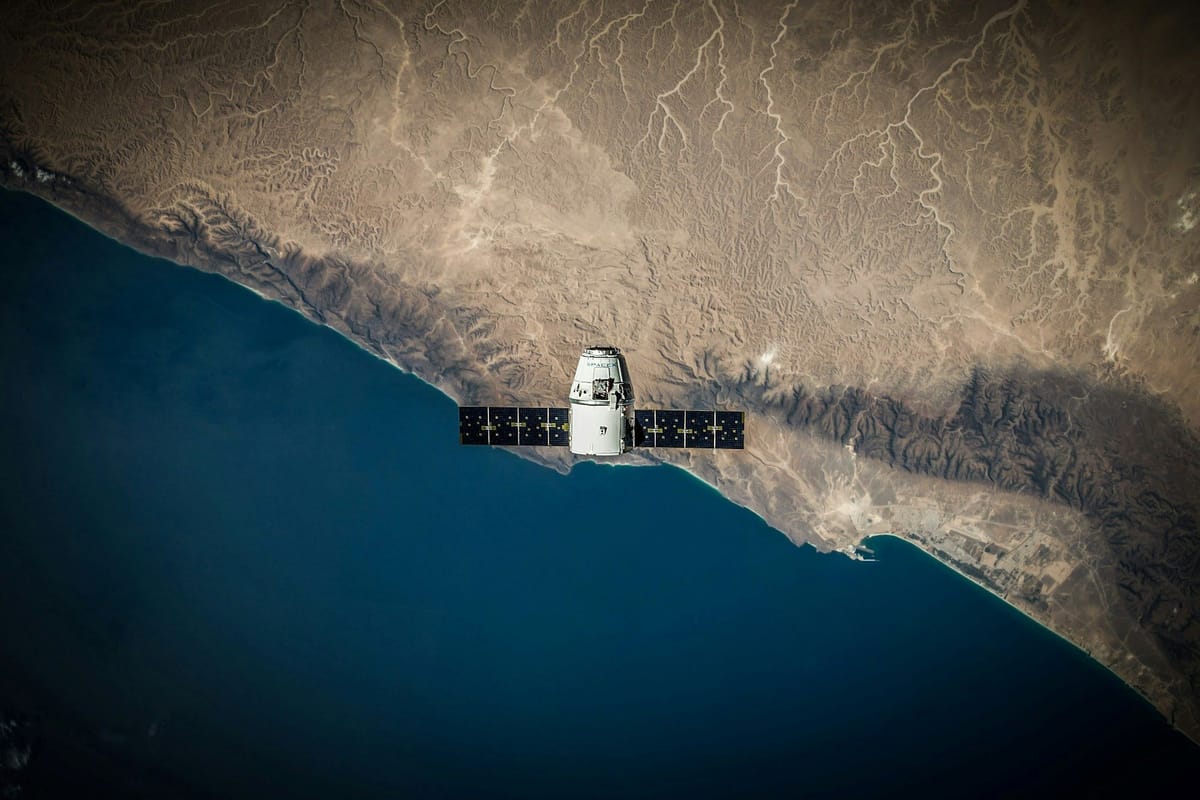
Canada's sovereign strengths are real but unevenly supported. The Canadian Space Agency's RADARSAT constellation provides genuinely world-class Arctic surveillance capability, imaging ice conditions and vessel movements across northern waters in all weather conditions. The Canadian Ice Service produces charts that are used by shipping operators, icebreaker captains, and climate scientists globally. The country's long history of polar research has produced data archives and institutional expertise that no other nation can replicate for Canadian Arctic conditions. These are strategic assets of genuine value. They are also assets that exist because of sustained public investment over decades rather than because commercial demand created them, and their continuation depends on political commitments that are subject to budget cycles and changing priorities.
The sovereignty ambitions that increasingly drive Arctic monitoring investment create their own tension. Canada's Arctic foreign policy commits to enhanced domain awareness, better surveillance of northern waters, and more robust presence in a region where climate change is attracting growing international attention. Delivering on those commitments requires ocean monitoring infrastructure, autonomous systems, satellite coverage, and communications networks that do not yet exist at the scale the ambitions imply. The gap between what Canadian marine technology could provide under ideal conditions and what is actually deployed in the Arctic is significant. Satellites provide wide-area coverage but limited resolution. Seasonal deployments capture summer conditions but not winter ice dynamics. Autonomous systems are advancing but remain dependent on government vessels for deployment and recovery in ice-covered waters.
What the marine technology sector in Canada ultimately reveals is a country that is genuinely excellent at generating ocean knowledge and genuinely limited in its ability to turn that knowledge into either commercial scale or operational sovereignty capability. The science is world-class in specific domains. The data infrastructure is impressive in places and sparse in others. The commercial ecosystem is productive in niches and underdeveloped at the system level. And the sovereign ambitions consistently run ahead of the operational reality. Closing those gaps will require not just more technology investment but clearer thinking about what Canadian ocean data is for, who it serves, and what governance structures should govern its collection, ownership, and use.