The Great Whales
Whale numbers have climbed back from near-extinction. So has their work in the ocean: moving nutrients up through the water, carrying carbon to the seafloor. The waters they returned to are busier and louder, and what happens next depends on how those waters are managed.

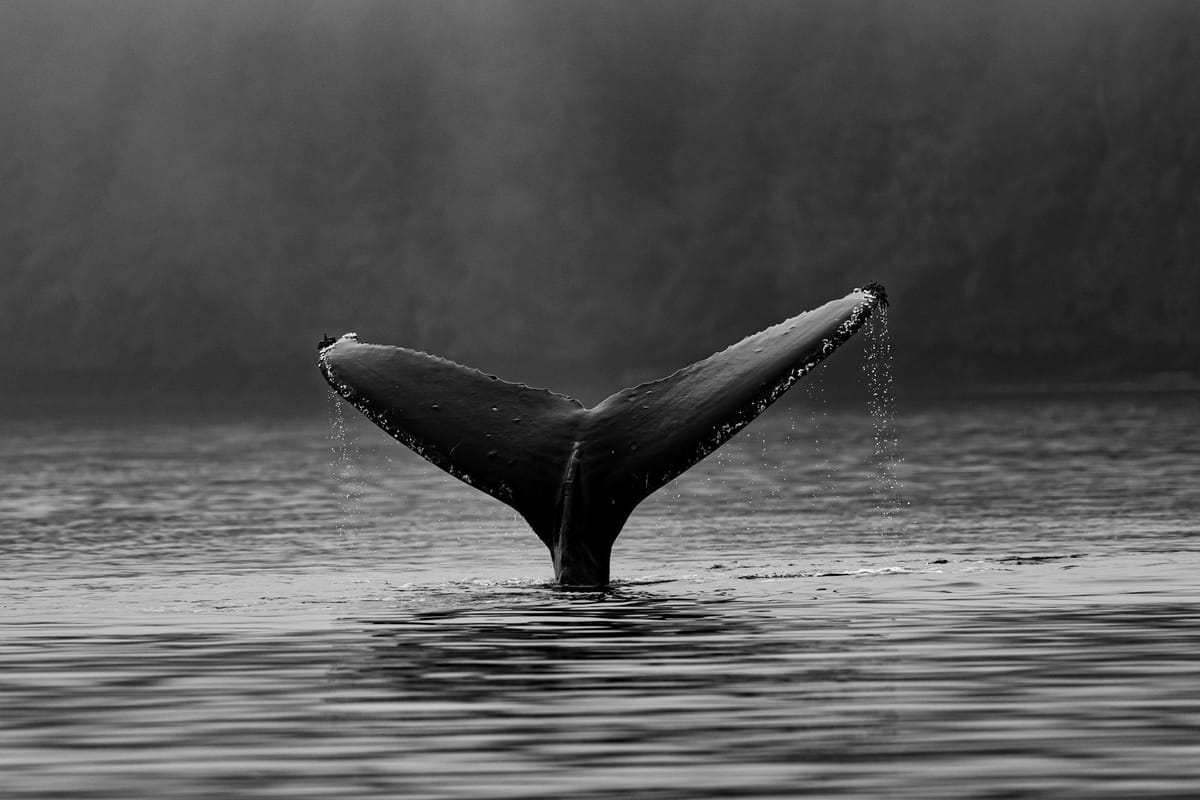
Commercial whaling in the twentieth century was one of the most concentrated acts of ecological destruction in recorded history. Between 1900 and 1986, when the International Whaling Commission’s moratorium came into force, an estimated two million whales were killed across the world’s oceans. Blue whale populations in the Southern Ocean fell by more than 99 percent. North Atlantic humpbacks were reduced to a few thousand individuals. Sperm whales, fin whales, sei whales: the pattern repeated across species and ocean basins. By the time the killing largely stopped, the great whales had been functionally removed from most of the ecosystems they had helped sustain for millions of years.
What has happened since is one of the clearest recovery stories in conservation biology. Humpback whales, listed as endangered for decades, were removed from the US Endangered Species List in most of their distinct population segments in 2016 following documented population growth. North Atlantic humpbacks now number around 35,000, up from perhaps 1,200 at the population’s lowest point. Eastern North Pacific gray whales recovered sufficiently that they were delisted entirely. Some blue whale populations in the Southern Hemisphere show signs of increase, though they remain at a fraction of pre-whaling abundance. The recovery is uneven and incomplete. It is also real.
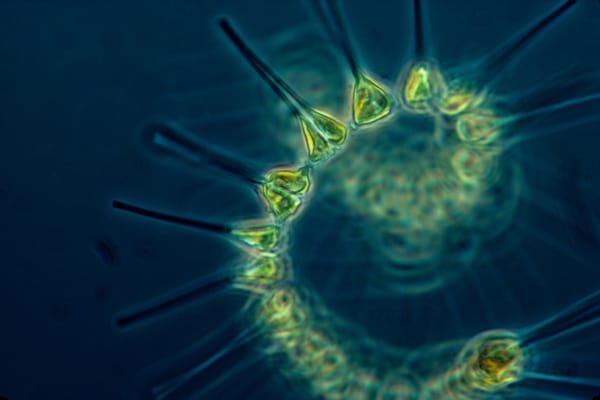
The recovery matters for reasons beyond the whales themselves. Whales are not passive inhabitants of the ocean. They are active participants in the systems that make the ocean function. One of the less intuitive contributions is what oceanographers call the whale pump. Whales feed at depth, consuming krill and fish hundreds of metres below the surface, then return to surface waters to breathe and defecate. That cycle moves nutrients, particularly iron and nitrogen, upward through the water column in a direction that ocean physics does not naturally favour. In iron-limited ocean regions, this vertical nutrient transport fertilizes phytoplankton blooms that support the base of the marine food web. More whales means more nutrient cycling. The removal of whales from these systems likely suppressed phytoplankton productivity in ways that are still being estimated.
There is a carbon dimension as well. Whales sequester carbon in their bodies over long lifespans, and when they die naturally, they sink. A single large whale delivers tonnes of carbon-rich biomass to the seafloor in what is called a whale fall, an event that supports deep-sea scavenger communities for years, sometimes decades, while keeping that carbon out of the atmosphere. One IMF working paper estimated that restoring great whale populations to pre-whaling levels could sequester carbon at a scale equivalent to removing millions of cars from the road annually. The methodology is contested and the numbers should be treated with caution. The underlying mechanism is not.
The recovery, though, is taking place in an ocean that looks very different from the one commercial whaling devastated, and that difference complicates the picture. Container ship traffic now crosses every major ocean basin, and vessel strikes are a significant cause of mortality for several species. The North Atlantic right whale makes the point most sharply. Despite decades of legal protection, the population stood at an estimated 384 individuals in 2024, up from a recent low of around 358 in 2020, but still critically endangered and acutely vulnerable. The two primary causes of mortality are entanglement in fishing gear and vessel strikes. The population is small enough that losing two or three reproductive females in a year alters the trajectory.
Noise is another layer. Commercial shipping generates continuous low-frequency sound that travels vast distances underwater. Whales use sound for navigation, foraging, and communication across ocean basins. The acoustic environment they evolved in no longer exists in most parts of the ocean. The behavioural and physiological effects of chronic noise exposure are still being documented, but the disruption to communication ranges is measurable. Some species have shifted call frequencies over recent decades in ways that appear to be responses to ambient noise levels.
Migration routes are also changing. As ocean temperatures shift, the prey species that whales follow are moving poleward or to greater depths. Humpbacks and blues recorded off Canadian coasts in recent years have appeared in areas where they were not historically documented, and the timing of seasonal migrations is shifting. Whether these changes represent successful adaptation or early indicators of population-level stress is not yet clear.
Governance produced the recovery, and governance is what the recovery now depends on. The IWC moratorium was contested, imperfect, and remains politically fragile. But it worked well enough that populations that seemed functionally gone have rebuilt to levels where their ecological contributions are becoming measurable again. That outcome is not guaranteed by a single instrument. It requires sustained management across shipping lanes, fishing zones, and changing habitat boundaries, the kind of coordination that a living marine system demands and that no single jurisdiction can provide alone.
The economic argument for that coordination is not separate from the ecological one. Whale watching has become a meaningful component of Canada’s coastal tourism economy: recent industry estimates suggest that whale-watching operations in the Pacific Northwest support more than 2,200 jobs and contribute roughly $173 million annually in wages and local economic activity. That value is not extracted from the whale. It depends entirely on the whale being there. The contrast between that kind of durable economic return and the depletion model that preceded it is, in miniature, the argument blue finance is trying to make across the whole ocean economy.
Recovery continues alongside ongoing pressure. That tension is not a failure of conservation. It is the condition under which ocean management actually operates.