Coral Reefs
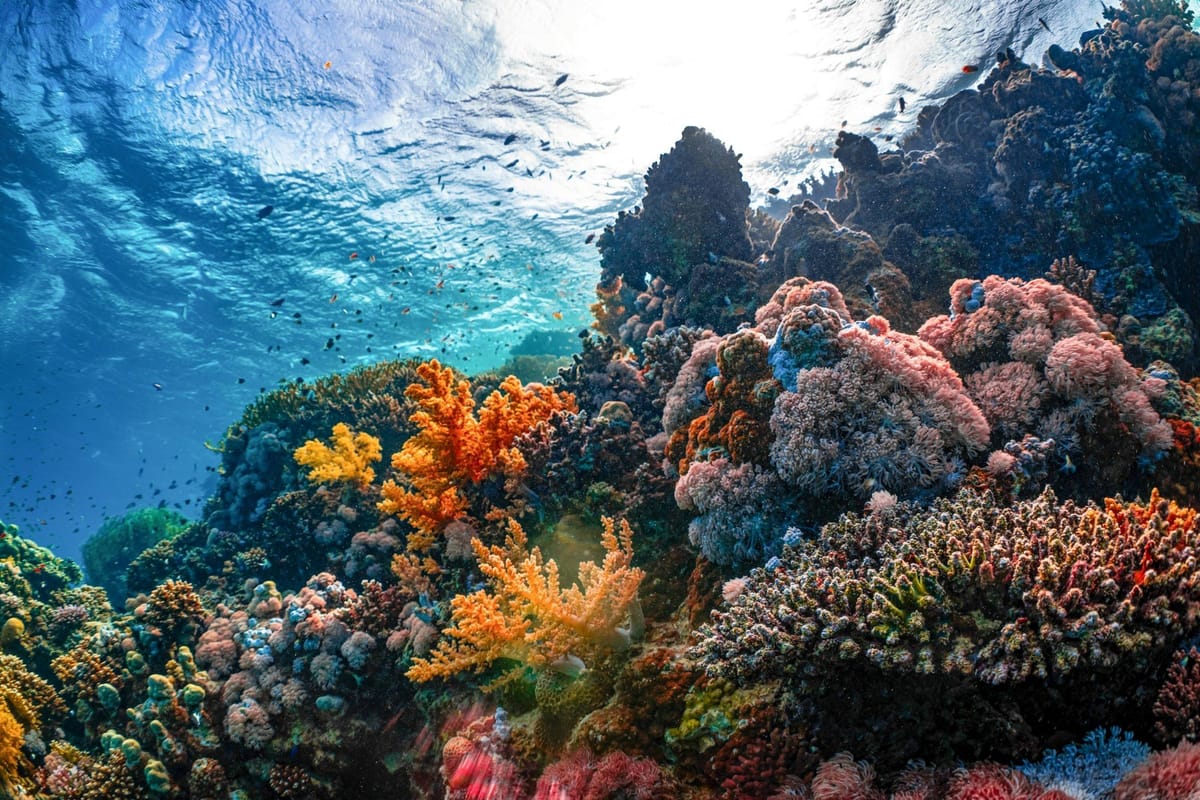
A coral reef is a living structure built by tiny animals. Algae inside the coral feed it and give it its colour. When water warms even slightly past the coral’s limit, the polyps expel the algae and turn white, and if the heat holds, they die. Standing reefs feed fisheries and blunt storm waves.

Coral reefs cover less than one percent of the ocean floor. They support roughly a quarter of all marine species. That gap between their physical scale and their ecological significance is the starting point for understanding what coral reefs actually are and why their condition matters well beyond the tropical coastlines where most of them are found.
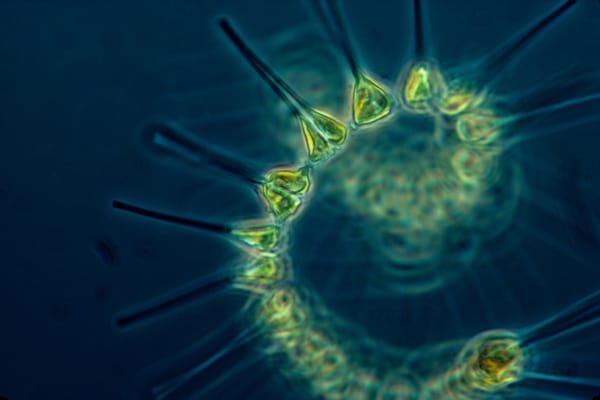
A coral reef is not a rock formation. It is a living structure built by tiny animals called coral polyps, each of which secretes a calcium carbonate skeleton that accumulates over centuries into the complex three-dimensional architecture that makes a reef visible from space. The polyps themselves are translucent. Their colour, and most of their energy, comes from symbiotic algae called zooxanthellae that live within their tissues and photosynthesize in the sunlit shallow water where reefs grow. That relationship between animal and algae is what makes coral reefs productive in waters that are otherwise nutrient-poor. It is also what makes them vulnerable. When water temperature rises even slightly above a coral’s tolerance threshold, the polyps expel their algae, turning white in a process called bleaching. Without the algae, the coral loses its primary energy source. A bleached coral is not dead, but it is under severe stress, and if temperatures remain elevated for weeks rather than days, mortality follows.
The ecological services that coral reefs provide extend well beyond the reef itself. They are nursery habitat for a significant fraction of the fish species that support tropical and subtropical fisheries, including many that are critical to food security in coastal communities across the Indo-Pacific, Caribbean, and Indian Ocean. Their physical structure dissipates wave energy, protecting coastlines from storm surge and erosion in ways that engineering alternatives cannot fully replicate at comparable cost. A healthy reef absorbs up to ninety-seven percent of the energy from incoming waves. When reefs degrade, the coastlines behind them become more exposed to the kind of storm damage that is becoming more frequent as ocean temperatures rise and tropical cyclones intensify.
The economic value attached to coral reef services has been estimated in various ways, and the figures are large enough to matter even to those who approach them with appropriate caution. A widely cited estimate puts the annual global economic value of coral reefs at approximately USD 375 billion, accounting for fisheries, coastal protection, tourism, and other services. That figure is a model-based estimate rather than a market price, and it carries the uncertainties that all such valuations do. What it signals is that the degradation of coral reefs is not an ecological loss that sits outside the economy. It is a material reduction in the flow of services that coastal communities and industries depend on, and that reduction has financial consequences that are beginning to appear in insurance claims, fisheries yields, and coastal infrastructure costs.
Canada does not have tropical coral reefs. It does have cold-water coral ecosystems along its Atlantic and Pacific coasts, including deep-water coral gardens in the Gulf of St. Lawrence and off the coasts of British Columbia and Newfoundland. These cold-water corals grow in deeper, darker water than their tropical counterparts and do not depend on the algal symbiosis that makes tropical reefs so productive. They are slower growing and less visually dramatic, but they provide similar structural habitat functions, supporting fish populations and biodiversity at depth. They are also poorly understood relative to tropical reefs and poorly protected relative to the pressures they face from bottom trawling and ocean acidification, which dissolves calcium carbonate structures more readily as seawater pH declines.
The global coral reef financing landscape has developed more rapidly than most ocean conservation finance areas. The Global Fund for Coral Reefs, established in 2020, combines a grant window for early-stage conservation and capacity work with an investment window targeting reef-positive businesses and initiatives expected to generate both financial return and measurable conservation impact. That blended structure, using public and philanthropic capital to reduce the risk profile of the investment window, is the most developed example of conservation finance applied specifically to coral reef ecosystems at scale. Insurance instruments for coral reefs have also emerged, most notably in Mexico where a parametric insurance policy covering the Mesoamerican Reef triggers automatic payouts when hurricane wind speeds exceed a defined threshold, allowing rapid restoration funding to be deployed before storm damage becomes permanent. These instruments are early and their coverage is limited, but they represent the beginning of a financial architecture for reef conservation that did not exist a decade ago.
What makes coral reefs a useful reference point for anyone thinking about blue finance is the clarity with which they illustrate the relationship between ecological condition and economic consequence. The reef either functions or it does not. When it functions, it provides fisheries habitat, coastal protection, and tourism revenue. When it degrades, those services diminish in ways that are measurable and that translate into real costs for real communities. Few systems show the connection between financial decisions, ocean conditions, and human welfare as directly and as plainly as a coral reef does.