Ocean Acidification

Since the industrial era, the ocean’s surface pH has dropped from 8.2 to 8.1, a 26 percent increase in acidity. Shell-building species feel it first, and in BC it already reaches juvenile salmon through the food web. The finance built around those fisheries has not priced it in.

Share
Ocean Acidification
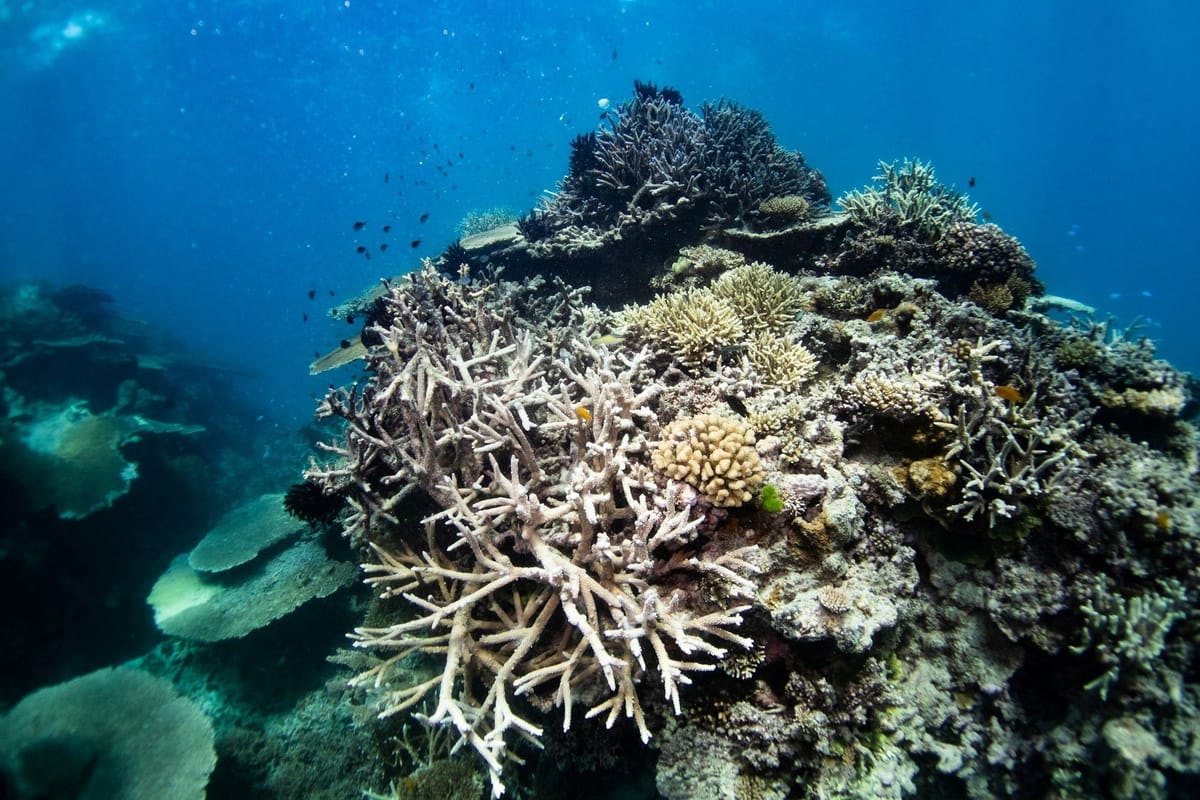
Photo by Joan Li / Unsplash

At some shellfish hatcheries in British Columbia and Atlantic Canada, operators have started timing their water intake around the tides. Seawater drawn under certain conditions is more corrosive to the calcium carbonate shells of juvenile oysters and clams than seawater drawn a few hours later, and the difference is large enough to decide whether a cohort of young animals survives its first hours of life. The operators are not responding to a projection or a model. They are responding to conditions in the water today. What they are managing around is ocean acidification, and that it has already reached the operating decisions of Canadian shellfish producers is one of the clearest cases available of ocean chemistry moving from atmospheric physics into economic consequence.

The mechanism begins with carbon dioxide. The ocean absorbs roughly a third of the carbon dioxide that human activity releases into the atmosphere, a process that has slowed the pace of atmospheric warming but has not done so without cost. When carbon dioxide dissolves in seawater it forms carbonic acid, which releases hydrogen ions into the water. More hydrogen ions means lower pH, which is the definition of acidification. Since the beginning of the industrial era, the average pH of the ocean’s surface waters has fallen from approximately 8.2 to approximately 8.1. That shift of 0.1 pH units is a roughly 26 percent increase in hydrogen ion concentration, because pH is a logarithmic scale. The change is measurable, documented, and continuing.

What acidification does to a marine organism depends on what that organism is made of. Shell-building species, including oysters, clams, mussels, sea urchins, pteropods, and many corals, construct their shells and skeletons from calcium carbonate. In more acidic water, calcium carbonate dissolves more readily and is harder to deposit. For juvenile shellfish in the earliest stages of development, when their shells are thinnest and their energy reserves smallest, the chemistry of the surrounding water can be the difference between survival and dissolution. This is not a metaphor. It is a measurable biological effect that hatchery operators are actively managing with water chemistry adjustments, pH monitoring, and modified intake timing.

The commercial consequences extend past the hatchery. Wild shellfish populations are exposed to the same chemical changes without the interventions a hatchery can apply. Pteropods, free-swimming molluscs that form a critical link in the food web of the North Pacific and Southern Ocean, are already showing shell dissolution in waters off the British Columbia coast. Pteropods are a primary food source for juvenile salmon. The connection between ocean chemistry, pteropod shell integrity, and Pacific salmon survival is not speculative. It is a documented pathway through which acidification reaches one of Canada’s most economically and culturally significant fisheries without appearing anywhere in a salmon stock assessment.

The regional picture in Canadian waters adds another layer. The North Pacific is naturally more corrosive than the North Atlantic, a difference in water circulation and carbon chemistry, which is why BC hatcheries have been managing for acidification longer than their Atlantic counterparts. The Gulf of St. Lawrence has warmed and lost oxygen faster than most of the global ocean, and acidification is a third stressor on an ecosystem already under significant pressure. Arctic waters, which take up carbon dioxide more readily because cold water holds more dissolved gas, are acidifying faster than lower-latitude oceans, with consequences for the marine food webs that northern communities depend on.

Coral reefs face a related but distinct version of the problem. Coral skeletons are also built from calcium carbonate, and acidification lowers the rate at which corals can calcify while raising the rate at which existing structures erode. Combined with warming water that triggers bleaching, acidification is compressing the range of conditions within which reef systems can persist. The Global Fund for Coral Reefs, whose blended finance structure was discussed in an earlier post, is responding to a reef crisis driven by warming and acidification at once. The instruments being built for reef conservation are being designed around an ecosystem under chemical as well as thermal stress.

The sequence runs one direction. Chemistry first, then biology, then the fisheries and the economic systems built on top of them, each responding later than the one before. The hatchery operators who have already changed how they run their intakes are not early adopters of a precautionary approach. They are among the first Canadian businesses to carry the cost of a chemical change that has already arrived. The question for financial systems is how long after the biology responds the economics will follow.