What Happens in a Marine Heatwave

A few degrees of warming in the northeastern Pacific collapsed fisheries, erased kelp forests, and ran up costs in the billions. What a marine heatwave actually does to the ocean, and why finance still struggles to price it.

Share
What Happens in a Marine Heatwave
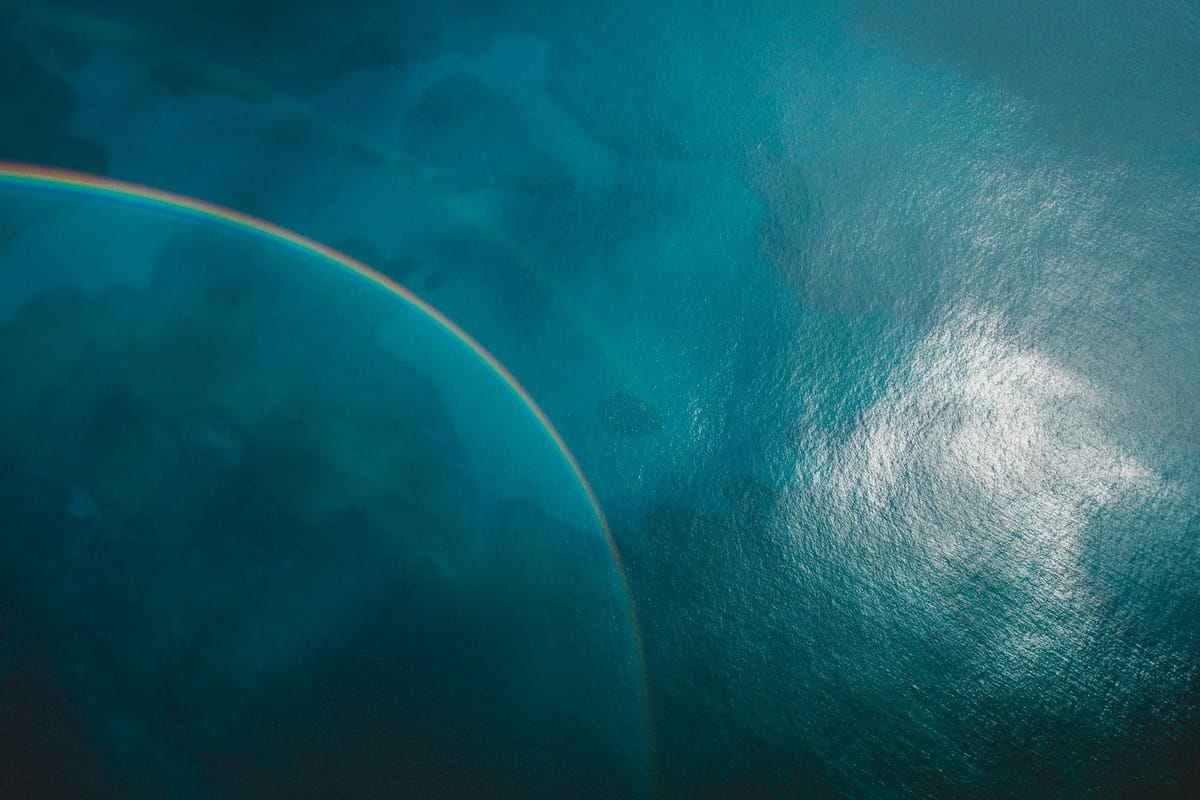
Photo by Jakob Owens / Unsplash

In the summer of 2013, water temperatures in the northeastern Pacific began rising above normal and stayed there. By 2014 the anomaly had a name, the Blob, and by 2015 it had spread across an area roughly the size of Canada. Surface temperatures ran two to four degrees Celsius above historical averages across vast stretches of the Pacific. That does not sound like much. In ocean terms it is enormous, and what followed made the scale of the disruption visible in ways that water temperature alone could not.

Salmon returned to rivers in poor condition or not at all. The Gulf of Alaska cod fishery, which had been producing around 70,000 tonnes annually, began collapsing. It was closed in 2020 and later reopened at less than a third of prior catch levels. California's Dungeness crab season was delayed for nearly five months. The recreational abalone fishery, valued at $24 to $44 million annually, closed entirely and remained closed in 2023. Federal disaster relief payments to commercial fishers in Alaska alone reached $56 million. Across the affected region, government support to compensate fishers for Blob-related losses totalled more than $140 million. The Pacific looked the same from shore. Underneath, it had been reorganized.

A marine heatwave is more than a stretch of warm water. It is a prolonged period during which ocean surface temperatures in a given region exceed the local seasonal threshold by a significant margin, typically defined as the 90th percentile of historical temperature for that time of year, for at least five consecutive days. What distinguishes a marine heatwave from normal temperature variability is persistence. A single warm week is weather. Temperatures running abnormally high for weeks or months restructure the conditions that marine ecosystems depend on. The Blob persisted for the better part of three years. The northeastern Pacific event of 2023 reached Canada's Pacific exclusive economic zone and continued offshore longer than monitoring projections had anticipated.

The ocean retains heat differently than the atmosphere does. Water has a far greater capacity to absorb and store thermal energy than air, which is why ocean warming lags atmospheric warming and why it persists long after the surface conditions that drove it have shifted. Once heat enters the upper ocean, it does not dissipate quickly. Currents can transport it horizontally across ocean basins. Stratification, the layering of warmer lighter water above cooler denser water, can trap heat near the surface and reduce the mixing that would otherwise moderate temperatures. In a marine heatwave, that stratification intensifies, cutting off the upwelling of cold nutrient-rich water that productive fisheries depend on. The ecosystem consequences follow from that physical change.

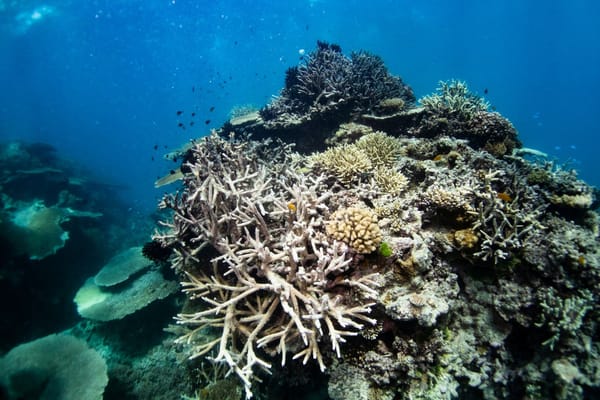
Those consequences move through the food web in sequence. Phytoplankton, which require specific temperature and nutrient conditions to bloom, shift in distribution or decline in productivity. The zooplankton that feed on them follow. The fish and marine mammals that depend on zooplankton find their prey in different places, at different depths, or not at all. Seabirds that cannot adjust their foraging range starve. The 2023 to 2025 global marine heatwave period exposed 84 percent of the world's coral reefs to bleaching-level heat stress, the largest such event on record. Coral bleaching occurs when temperatures exceed the thermal tolerance of the symbiotic algae living within coral tissue: the coral expels the algae, turns white, and without intervention eventually dies. Kelp forests, which depend on cold nutrient-rich upwelling, collapse when that upwelling disappears, taking with them the habitat that hundreds of species rely on for shelter and food. Together they amount to a reorganization of the systems that productive oceans require.

The economic consequences of that reorganization are substantial and now well documented, even if they remain underpriced in financial markets. The Blob's fisheries losses across the northeastern Pacific ran into hundreds of millions of dollars in direct relief payments alone, not counting the longer-term effects on stocks that have not recovered. In 2023 and 2024, Peruvian anchovy closures driven by ocean temperature anomalies generated an estimated $1.4 billion in losses to one of the world's most important fisheries. In southern Chile in 2016, a marine heatwave and associated harmful algal bloom caused more than $800 million in direct aquaculture losses. These are documented outcomes, and the events that produce them are becoming more frequent.

The frequency trend is significant. Annual marine heatwave days doubled between 1982 and 2016. The summers of 2023 and 2024 recorded nearly three and a half times as many marine heatwave days as any previous year on record. In 2024, 93 percent of the global ocean experienced at least one marine heatwave. The baseline itself is shifting, and these years register that shift.

For financial institutions and insurers, marine heatwaves present a challenge that the current toolkit is not well designed to address. Fisheries losses from heatwave events are documented in disaster relief data, but they are not yet systematically priced into lending to fishing companies or aquaculture operators. Marine heatwaves are not a named insurance peril in most markets: the Geneva Association and UNDP have been exploring parametric insurance products for reefs and aquaculture, and the Mesoamerican Reef insurance structure protects coastal assets linked to more than $3 billion in annual reef-related income, but these are early and partial responses. The exposure is real and growing. The financial infrastructure to price and transfer it is still being built.

That gap is not surprising. Marine heatwaves are difficult to predict at the asset level, their consequences move through ecosystems before they appear in financial statements, and their most severe effects fall on fishers, coastal communities, and governments, far from the balance sheets of the large institutions that do most of the pricing. The costs are distributed across parties with limited capacity to absorb them, which is precisely the pattern that makes a category of risk chronically underpriced until it becomes impossible to ignore.

Marine heatwaves are already a present condition, and the financial system is only beginning to account for them. The ocean has been absorbing stress for decades. The reorganization of marine ecosystems that stress produces is now visible enough that the economic consequences are being measured in real time. Pricing that risk accurately, and directing capital toward the conditions that reduce it, is one of the more concrete problems blue finance exists to address.