Who Leads Ocean Conservation in Canada
Canada has no single authority in charge of ocean conservation. Legal power, money, accountability and the work on the water sit in different hands, and outcomes turn on whether those reach each other

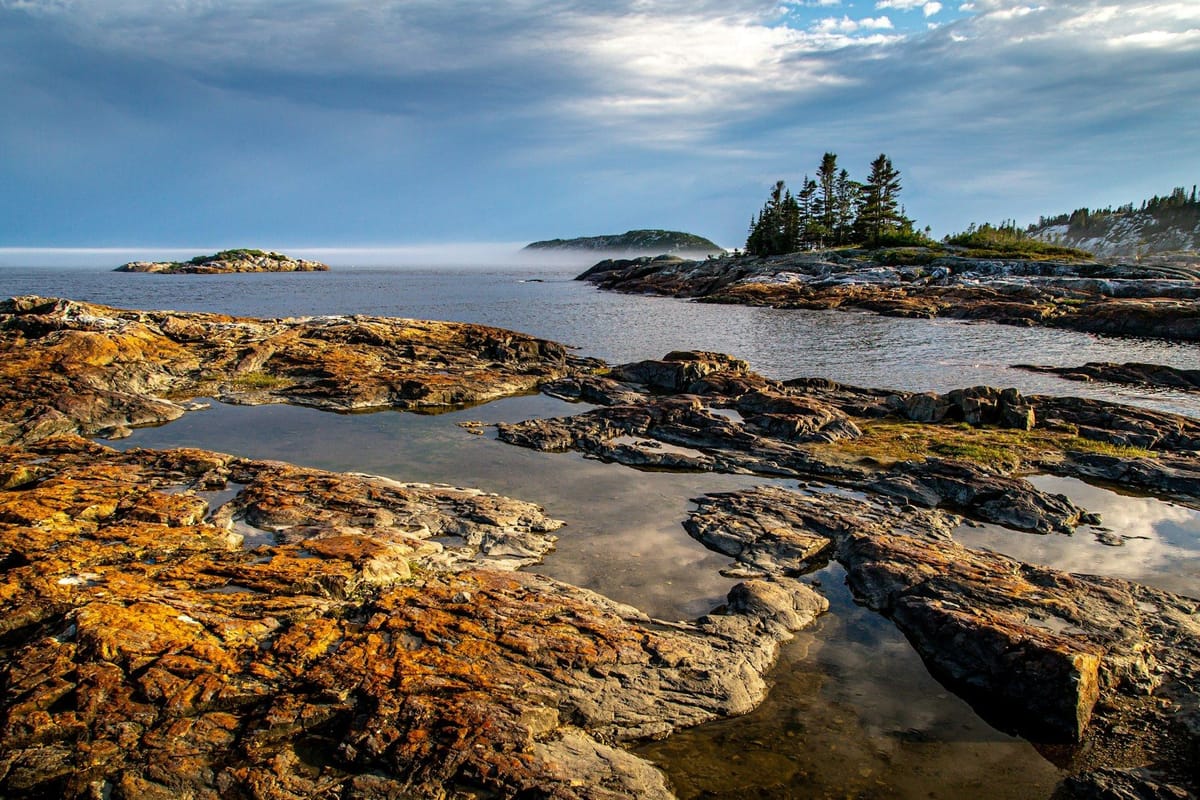
On March 28, 2026, two stretches of Arctic water became marine protected areas. Qikiqtait surrounds the Belcher Islands in Hudson Bay, Sarvarjuaq lies in northern Baffin Bay on the Canadian side of the North Water Polynya, and between them they cover about 116,400 square kilometres. The instrument was a ministerial order under the Oceans Act, which freezes the footprint of new human activity for up to five years while longer-term protection is worked out. Hunting, trapping and fishing that were lawfully happening the year before carry on. Ask who led that and there is no single answer, which is the interesting part. The question sounds like one about organizations. It is really about what kind of influence each party holds, and those kinds do not substitute for one another.
Formal legal authority over marine conservation stays concentrated in three federal departments even as conservation leadership has spread well beyond them. Fisheries and Oceans Canada administers sixteen Oceans Act marine protected areas covering more than 600,000 square kilometres, roughly a tenth of Canada's marine and coastal waters. Five national marine conservation areas sit with Parks Canada, representing six of the twenty-nine marine regions in its system plan. A third set of powers belongs to Environment and Climate Change Canada, whose sixty-four national wildlife areas protect more than 3.5 million hectares, almost half of that marine habitat. The instruments differ more than a map of protected areas suggests. A regulated Oceans Act MPA, an interim order like the two signed in March, a national marine conservation area under its own statute and a wildlife designation reaching out into salt water prohibit different things, for different periods, on different legal footing.
Behind the March orders sits an agreement the Qikiqtani Inuit Association signed with Canada on February 27, 2025. SINAA, an Inuit word for the floe edge where land-fast ice meets open water, was known before that as the Qikiqtani Project Finance for Permanence. Under it Canada transferred CAD 200 million to the Aajuraq Conservation Fund Society, an independent fund governed by a board appointed by Inuit and by donors, and philanthropic donors pledged a further CAD 70 million, with the combined capital expected to generate returns and draw further investment into the region over fifteen years. Once transferred, the money is managed and disbursed by Aajuraq to QIA under SINAA's conservation and financial plans rather than through annual federal appropriations.
Operational capacity is what turns a designation into something that happens on the water. SINAA expands the Nauttiqsuqtiit stewardship program and pays for Nauttiqsuqtiit Conservation Centres, so the people doing the monitoring have equipment and somewhere to work from. The department's own description of the agreement lists enhanced Inuit governance and stewardship for areas that already existed, including Tallurutiup Imanga and the marine refuges at Disko Fan, Hatton Basin and Davis Strait. These are not consultation mechanisms. They are governance infrastructure, and in the parts of Canada where they operate they determine what conservation looks like on the ground.
Some of the organizations best placed to make a decision visible have no authority to reverse it. Oceana Canada has published a Fishery Audit every year since 2017, and the ninth, released November 25, 2025, found that just over a third of Canada's managed marine stocks could be called healthy and another third had no determinable status. It also recorded that the northern cod quota had gone from 18,000 tonnes to 38,000 tonnes that June, and that the department's own assessment put the probability of the stock declining within three years as high as 71 per cent. Oceana could not reverse the decision. By June 2026 Fisheries and Oceans Canada was reporting the stock in the healthy zone and raised the quota again, to 59,000 tonnes. What the audit did was put the earlier disagreement, and the department's own numbers at the time, where a reader could find them.
A minister setting a quota, a fund board investing long-term capital and an advocacy group publishing an audit are working under different pressures, on different clocks, with different information in front of them. Quotas are decided annually and governments face the electorate every few years, while SINAA's capital is intended to support conservation over a much longer period. Nobody in that description has to be acting in bad faith for the outcomes to pull apart. Communities on the coast are where the pulling apart lands. For a household whose income depends on what swims past, a quota, a protection order and a stewardship wage are one conversation rather than three files, and no two of them are settled in the same building.
Legal authority without implementation capacity produces designations that exist on paper. Money without governance legitimacy buys projects that the community never comes to own. Whether conservation works in a given place turns on whether authority, capital, accountability and operational capacity reach one another, and in the Qikiqtani region at the moment they appear to, which is a narrower claim than saying the Canadian system works. I began by asking who leads. No single institution does. Different organizations lead different parts of the work, and the more useful question is where those forms of influence connect and where they do not.