Who should pay to keep an eye on Canada’s oceans?
Ocean observations serve communities, governments and businesses. Financing them requires a clear understanding of who benefits and what each user needs.

A large vessel approaching the Port of Halifax needs sufficient water beneath its hull to pass safely through the harbor. That clearance varies with the tide, the vessel’s movement and the conditions it encounters along the way.
To help assess that clearance, a new operational trial at the port is bringing together wave forecasts, tide information and input from pilots, terminal operators and others. The trial is testing a system intended to support safer vessel transits and more efficient use of the harbor’s channels. Victoria-based MarineLabs is contributing coastal weather information.
The Halifax project demonstrates how different organizations can bring information together to support decisions on the water. It also raises a question that comes up in my work as Senior Advisor for Blue Finance at The Ocean Cleanup: how do we pay for a service whose benefits extend beyond any one organization?
In our efforts to rid the world’s oceans of plastic, our Interceptors are often the most visible part of the work. But keeping an Interceptor operating also requires people, maintenance and monitoring, as well as arrangements for the plastic collected. Those costs continue after the initial deployment. Finding reliable support for that continuing work is an important part of the financing challenge.
Ocean observation presents that challenge in a different setting. A port may be willing to pay for a forecast tailored to its operations, while researchers and coastal communities may benefit from freely available observations. They may rely on equipment in the same water, but their needs — and their ability to pay — can differ.
The question is particularly timely in Canada. In September, the federal government pledged $82 million over five years to strengthen ocean observation as Canada and the European Union launched the OceanEye International Alliance for the Global Ocean Observing System. The commitment includes plans for Arctic observation devices and sensors and gliders along the Atlantic coast.
A November report on the Global Ocean Observing System found that many observing networks still struggle to secure the sustained funding needed to maintain and expand their work. Canada’s commitment is a welcome step; it also provides an opportunity to consider what will support these capabilities over time.
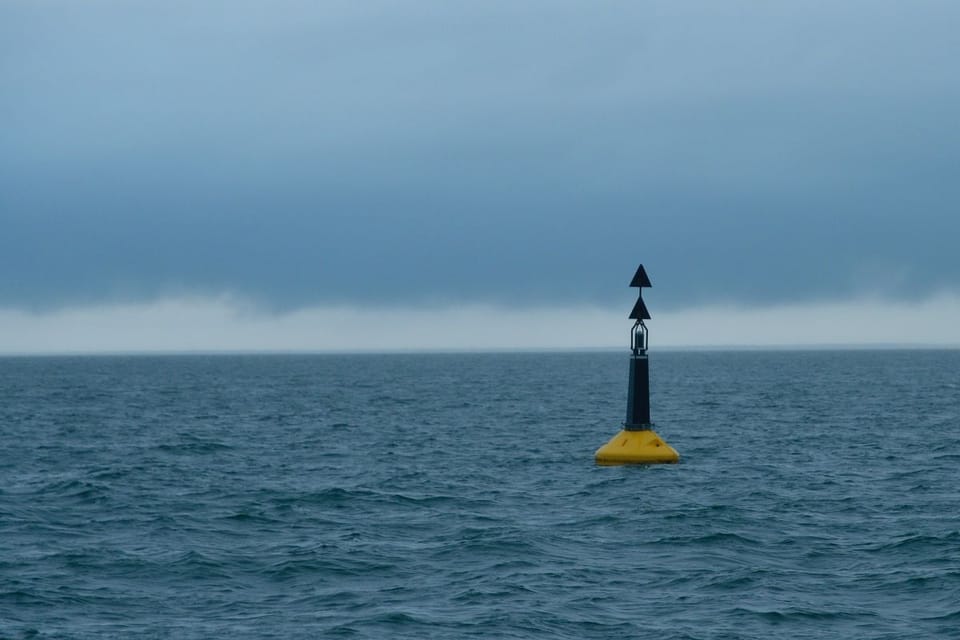
MarineLabs offers one perspective. Its CoastAware platform uses a network of sensors to collect local wind, wave and other data, and provides information to ports and marine operators through a subscription service.
CEO Scott Beatty has explained why the company chose that model. In an interview with Douglas magazine, he said recurring revenue offers “benefits in terms of being able to access capital for our company.” Keeping responsibility for the equipment also lets MarineLabs manage maintenance and focus on providing reliable information.
That distinction matters. A customer pays for information it can use, while the provider remains responsible for much of the equipment and work behind it. For the provider, a continuing customer relationship can also help support the case for investment. It does not guarantee that financing will be available, but it gives a prospective funder something more concrete to assess than a technology alone.
MarineLabs has attracted investment as it has grown. In 2024, the company announced a $4.5 million seed round led by BDC Capital with participation from Seaspan Shipyards. It announced a further $4 million seed extension in 2025, led by BDC Capital with participation from InBC Investment Corp.
Public support has also helped test aspects of its technology. A federal innovation program awarded MarineLabs a contract in 2022 to test BuoyCam, a system providing real-time coastal images. The program reported that the technology was deployed at 16 beta-testing locations on Canada’s Atlantic and Pacific coasts.
Those forms of funding serve different purposes. A test can help establish whether a technology works in operating conditions. Investment can support a company’s development and expansion. Customers provide revenue for a service they find useful.
But success at each of those stages does not, on its own, answer a longer-term question: who will pay to keep the observations available when a pilot ends, an investor’s priorities change, or a customer no longer needs the service?
The question extends beyond the purchase of a sensor. As Canada’s Ocean Supercluster has observed, a lasting marine capability also requires people and organizations able to operate, maintain and adapt the systems over time. Those costs need a place in the financing plan.
The question becomes more complicated when the same observations could serve several different users.
Consider a hypothetical network along a busy stretch of coastline. A public agency wants reliable observations to support forecasting and marine safety. A port wants a tailored service to help its operators make decisions about vessel movements. Nearby coastal communities want information suited to their own priorities and a voice in how data concerning their waters are collected and used.
All may benefit from some of the same equipment. They do not necessarily need the same service, have the same resources or hold the same authority.
Suppose the port pays for a specialized forecasting service, while a public agency funds the core observations. If the port later ends its subscription, the tailored service may stop, but the underlying network could continue. If the entire network depends on that one customer, the consequences could be much greater.
The financing challenge is to match each source of funding to the benefit it can reasonably support — and to reduce the risk that shared observations disappear if one customer’s needs change.
One possible approach would be to fund a core observation service over several years because it serves a public purpose. That commitment would need to cover more than equipment in the water. Communications, calibration, maintenance and eventual replacement would all need a place in the budget. Commercial customers could then pay for additional services suited to their operations, such as tailored forecasts or decision-support tools.
A customer would have a clearer reason to commit if the service helped its operators make decisions. The provider could use those commitments to plan for staff and equipment and, where appropriate, approach lenders or investors for upfront capital. The terms would matter: the length of the contract, the customer’s ability to pay and the circumstances in which either party could end it would all affect the financing available.
This approach has limits. Public funding may not be renewed, and subscriptions may not cover the cost of the underlying network. An agreement would need to establish what information remains publicly accessible, who is responsible when equipment fails and what happens if a customer withdraws. A multi-year commitment can help, but it cannot remove these risks.
The right arrangement will depend on the network’s purpose and the people it serves. A system designed principally for public science may need a different funding model from one built around a commercial customer.
Ocean Networks Canada offers a different approach to ocean observation. It describes community observatories designed in consultation with local leaders, with data made freely accessible through its platform. Such systems can support research, education and community needs even where no single commercial customer would pay for the full service.
Publicly accessible data and paid services may coexist, but the relationship between them requires care. Communities and Indigenous rights holders should be involved from the outset where observations concern their territories, priorities or knowledge. Access to data, control over its use and the capacity to benefit from it are part of the financing discussion.
The terms of an agreement can also determine whether a provider can finance and deliver a service. Equipment may need to be purchased and deployed before the provider receives enough revenue to cover those costs. A customer, meanwhile, may be reluctant to commit to several years of payments until it has confidence in what it will receive. A short trial can help both sides learn.
Ocean observations can support a range of activities, from safer navigation to scientific research. For those interested in blue finance, another consideration is whether the funded activity can also contribute to a healthy ocean. Better information does not automatically lead to a better environmental outcome. That depends on what is measured, who can use the information and whether it informs decisions that protect marine ecosystems.
Consider Canada’s efforts to protect the North Atlantic right whale. In designated management areas, an acoustic or visual detection can trigger a temporary closure to certain fixed-gear fisheries, intended to reduce the risk of entanglement. The observation matters because it informs a decision: authorities issue a notice, and affected harvesters must respond. Fisheries and Oceans Canada’s 2026 measures set out how those decisions are made.
That decision depends on more than the instrument in the water. Equipment must be maintained, information assessed and communicated, and the measures administered. The people affected also need timely notice. Better data can support an environmental outcome, but the observation is one part of the work required to achieve it.
Brian Rogers explored a related challenge in How Do We Know What We Are Doing to the Ocean?, distinguishing the collection of observations from interpreting what happened and providing assurance that others can rely on. A sensor can contribute to that work, but information must also reach people who can use it.
If environmental benefits are part of the reason for public investment, those benefits should help shape what is measured, who has access to the information and how it can be used.
Canada’s investment can help put more eyes on the ocean. As governments and their partners put that commitment to work, they have an opportunity to decide which observations should be broadly accessible, who will maintain the underlying capability and which tailored services might attract paying users.
Answering those questions will help determine not only what Canada can observe over the next five years, but what information remains available to guide decisions in the years that follow.
Author Bio
Monty Simus is Senior Advisor for Blue Finance at The Ocean Cleanup and leads illuminem’s Environmental Infrastructure initiative. He is also a PhD researcher with the University of Birmingham’s Treatied Spaces Research Group. His professional experience spans Asia, the Pacific and North America. His writing examines how environmental services can be financed, governed and sustained over time, while his doctoral research focuses on Indigenous jurisdiction and resource politics in Bristol Bay, Alaska.