Who pays to keep ghost gear out of the ocean?
Canada’s ghost-gear work shows why funding for prevention and recovery needs to last beyond a pilot.

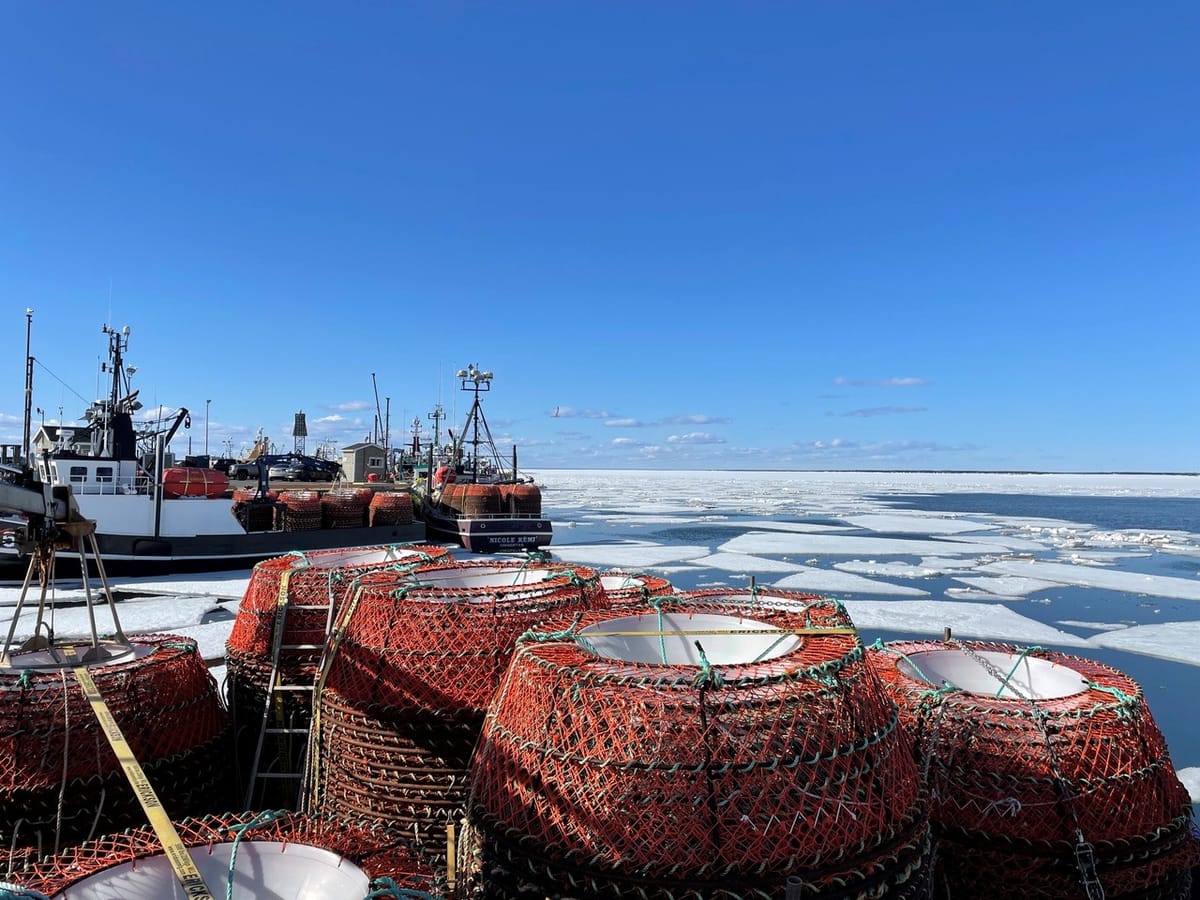
At The Ocean Cleanup, our blue finance work raises a practical question: how can funding support cleanup today while encouraging prevention that could reduce the need for it tomorrow?
An agreement that pays for each tonne removed gives both parties a clear measure of activity. But a fall in collections needs explaining. Better upstream waste management may mean less plastic enters a river. Equipment may also have been out of service. The collection figure alone cannot distinguish between the two.
That distinction matters when the next payment is due. Staff salaries, maintenance and the responsible handling of collected material all need funding. Even when prevention is working, those costs may take time to fall.
The challenge is to give operators dependable funding for the work that remains, while allowing budgets and capacity to change as less cleanup is needed.
Our offshore work brings a related challenge. The Ocean Cleanup reports that abandoned, lost or otherwise discarded fishing gear accounts for 75% of the plastic we collect from the Great Pacific Garbage Patch. We have also joined the Global Ghost Gear Initiative, contributing research to efforts to prevent further losses.
Preventing further losses does not remove the gear already at sea. A retrieval campaign can reduce that accumulated stock without changing how much gear will be lost next year. Prevention and recovery both need funding, often over different timescales.
Canada is already working through some of these questions.
In May 2026, Fisheries and Oceans Canada announced C$15 million over three years to help prevent, locate, retrieve and safely dispose of ghost gear. DFO is also developing a Canadian Ghost Gear Action Plan, due in spring 2027, intended to make ongoing ghost-gear management part of regular fisheries operations.
Who will pay for that continuing work?
I put the question to Kortney Opshaug, CEO of California-based Blue Ocean Gear, which develops tracking technology to help harvesters prevent gear loss. According to Opshaug, the company’s Canadian work has spanned multiple fisheries in the Maritimes and British Columbia, with hundreds of Smart Buoys helping harvesters track their gear and recover it before it becomes lost or entangled.
Her emphasis was on preventing further losses now. Gear already at sea still needs to be recovered, but retrieval alone cannot stop new losses adding to the problem. Financing needs to support both tasks.
For harvesters, prevention technology also needs to make financial sense. Opshaug explained that the costs of Smart Buoy technology are weighed against fuel saved locating gear, the ability to detect gear theft, and the cost of replacing lost equipment and catch. Those calculations vary with the fishery, gear type and operating practices.
A funded pilot can show that equipment works. Continued use depends on whether the benefits justify paying for it season after season.
The buoys also carry sensors that record ocean conditions. Blue Ocean Gear is exploring whether organizations that use those observations could help meet ongoing data costs. Opshaug emphasized that the company already uses data-sharing agreements to specify how information may be used, who can access it and for how long.
She described a Bering Sea project in which temperature observations from Smart Buoys attached to fishing gear were shared with the U.S. National Weather Service in de-identified form. The aim was to verify and potentially improve weather models, with possible benefits for harvesters and other mariners. The project demonstrates how observations collected during fishing operations can also serve a wider public purpose.
The financing opportunity is to determine whether users who benefit from these observations will pay for a continuing service. Agreements to purchase data could help cover operating costs. Whether they could also support upfront investment would depend on their duration, payment terms and reliability.
Canada’s recent commitments make this worth examining. On September 29, Prime Minister Mark Carney announced a C$1.2 billion ocean-protection package, including renewed Oceans Protection Plan measures. The announcement also noted a separate C$82 million commitment over five years to strengthen ocean observations. As Canada strengthens that capacity, there is a practical case for examining how observations collected through fishing operations could complement other monitoring systems.
Another approach is to secure contributions from seafood companies that depend on the fishery. The Fisheries Improvement Fund, developed by Finance Earth with WWF, provides upfront finance supported by supply-chain company contributions, generally linked to sourcing volumes. Its model includes minimum annual contributions. Although broader than ghost gear, it shows how continuing buyer commitments can help fund improvements before their benefits are fully realized.
A Canadian partnership could combine harvester payments, where savings justify the expense, with commitments from seafood buyers and customers purchasing ocean observations. Public funding would remain necessary for environmental work those revenues cannot cover.
Before relying on these payments, the partnership needs to establish what each participant is willing and able to fund. Savings must be substantiated, and data sales must contribute more than they cost to deliver. It also matters whether charges are ultimately passed on to harvesters or consumers.
Payments can be linked to seafood purchases or data provision, while environmental performance is assessed separately. This gives operations a source of support that does not depend on collecting ever larger quantities of lost gear. Evidence of gear loss, retrieval and responsible disposal can then guide decisions about the work itself.
Brian Rogers examines the difference between tracking where blue finance goes and establishing what happened in the water in “Who Checks That Blue Finance Works?” The next question is how a funding agreement responds to that evidence.
If collections fall because an operator has not met its agreed obligations, the contract should address the shortfall. If credible evidence shows prevention is working, funding should reflect the remaining task. Where the explanation is uncertain, the parties need an agreed review process rather than an automatic payment adjustment based on tonnage.
Ghost-gear figures need particular care. DFO acknowledges incomplete loss reporting in some fisheries. Better reporting could increase recorded losses without an equivalent increase in actual losses. Retrieval figures also depend on search effort and how accessible the remaining gear is.
An agreement can allow for these limits by funding agreed operating capacity, requiring evidence of recovery and disposal, and assessing prevention separately. Recovering gear does not, by itself, establish ecological recovery. Nor should a retrieval operator automatically receive credit for losses prevented by harvesters.
A useful next step would be to work through the costs and payment arrangements with an existing Canadian partnership. Harvesters, Indigenous partners, buyers, retrieval teams and disposal organizations could take part, with prospective data customers involved where relevant. Indigenous authorities and arrangements for governing knowledge and data would need to shape that work.
The partnership could then examine what happens to its funding if sourcing volumes fall, a data customer withdraws, recovery costs rise or weather limits retrieval. That would help establish which commitments can sustain the service and where public support is still needed.
Turning a funded project into a dependable service requires agreement on who pays for continuing operations and what they expect in return. The arrangement also needs to change as the work changes. For prevention technology, purchasing equipment is only the first step.
Canada’s ghost-gear action plan offers an opportunity to address these funding questions. Retrieval remains necessary while accumulated gear is still at sea, and prevention needs support alongside it. The financing should keep both working and allow resources to shift when there is finally less to recover.
Author Bio
Monty Simus is Senior Advisor for Blue Finance at The Ocean Cleanup and leads illuminem’s Environmental Infrastructure initiative. He is also a PhD researcher with the University of Birmingham’s Treatied Spaces Research Group. His professional experience spans Asia, the Pacific and North America. His writing examines how environmental services can be financed, governed and sustained over time, while his doctoral research focuses on Indigenous jurisdiction and resource politics in Bristol Bay, Alaska.