Shipping and Ports: Finance
Canada’s ports look like public infrastructure, but the capital behind them is a hybrid of self-funding authorities, private operators, and a fast-growing layer of public financing. How money actually moves through the system, why labour is an underpriced risk, and where the investment case sits.

Canada’s port system looks, from the outside, like public infrastructure. Federal land, federal incorporation, federal oversight. That framing is accurate but incomplete. The financial reality is a hybrid model that combines commercial self-sufficiency obligations, public capital, private terminal operators, and a growing layer of institutional financing. Understanding how capital actually flows through this system matters for anyone thinking about marine infrastructure as an investment category or a risk exposure.
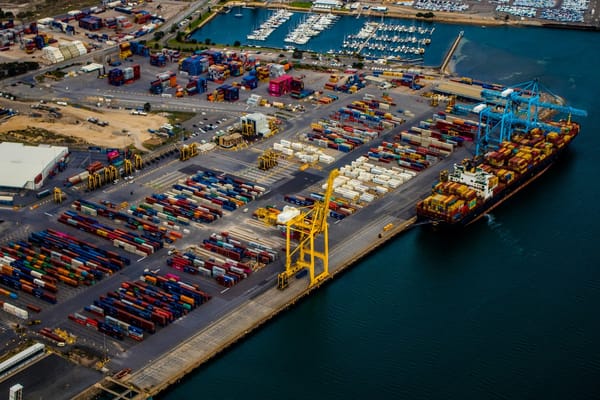
Canada Port Authorities are federally incorporated, arm’s-length, non-share corporations expected to operate without government subsidy. They generate revenue from leases, wharfage, dredging, and investment income, and they are required to be financially self-sustaining under the Canada Marine Act. That self-sufficiency principle determines how they approach capital: they borrow, they generate cash flow, and they attract private terminal operators instead of owning and operating terminals themselves. The port authority is closer to a landlord and systems planner than a cargo handler, which means the most capital-intensive assets, container cranes, bulk terminals, rail yards, and tank farms, are typically owned and operated by private terminal companies, not by the port authority itself.
The numbers that emerge from this model are significant. The Port of Montreal reported investing $107 million in its capital program in 2024, financed through self-generated cash flow, liquidity, public financing, and committed credit lines. Standard and Poor’s rates Montreal AA, which reflects both the port’s commercial position and its federal institutional backing. Prince Rupert reported $155.8 million in capital expenditures and described roughly $3 billion in gateway investment being activated across its current expansion phase, spanning container berths, energy export terminals, and rail transload infrastructure. The St. Lawrence Seaway Management Corporation announced more than $350 million in infrastructure upgrades over three years. These are large, long-lived assets with long payback periods, and their viability depends heavily on policy continuity and trade volumes that can shift quickly.