The Great Pacific Garbage Patch

The Great Pacific Garbage Patch reflects how materials move through connected systems and how the decisions that influence activity in the ocean accumulate into real-world outcomes.

Share
The Great Pacific Garbage Patch
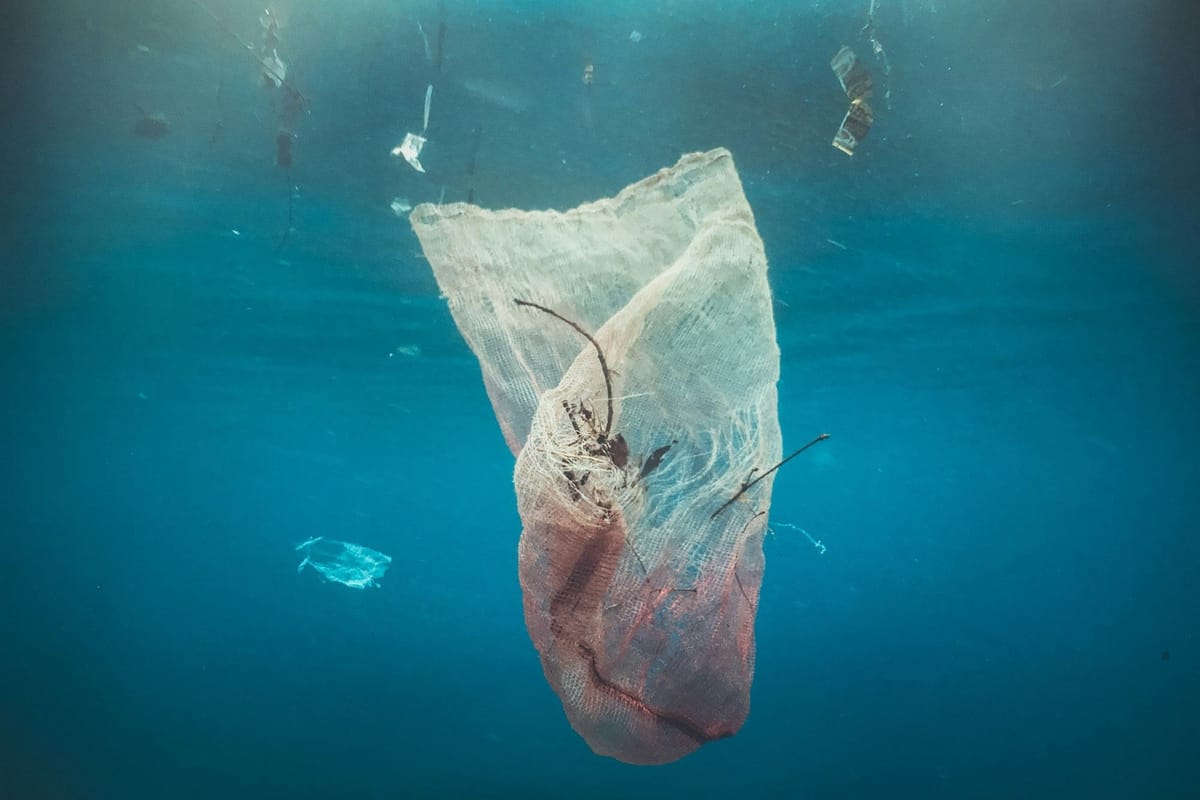
Photo by Naja Bertolt Jensen / Unsplash

Earth's history is divided into geological epochs, long periods defined by the conditions that prevailed. These include shifts in climate, the distribution of life, and the chemistry of the atmosphere and oceans. Scientists now describe the present period as the Anthropocene, from the Greek anthropos, meaning human, reflecting the extent to which human activity has become a defining influence on those same systems.

This influence shows up in different ways. Changes in atmospheric composition, land use, biodiversity, and ocean conditions are all part of it. The period is generally associated with the beginning of the industrial era, when human activity began to affect systems at a larger scale. Activities that were once local now produce effects across regions and across longer timeframes.

The ocean is part of that shift.

For much of the last century, it was treated as a system that could absorb what was put into it. Its size and depth suggested that materials would disperse, dilute, or settle without creating lasting concentrations.

In the North Pacific, there is now a clear example of how those assumptions work in practice.

The Great Pacific Garbage Patch is a large area of the ocean where floating debris has accumulated. It sits between Hawaii and the west coast of North America, within a system of ocean currents that circulate slowly. The material within it includes discarded fishing gear, plastic containers, packaging, and a wide range of smaller fragments.

Most of the plastic has been in the water long enough to begin breaking down. It does not decompose in the way organic material does. Instead, it fragments into smaller and smaller pieces, many of which remain near the surface. The patch is not a solid mass but a region where debris is present in higher concentrations than surrounding waters, spread across a very large area. Estimates vary, but the area is on the order of 1.6 million square kilometres, roughly twice the size of Texas. Because it is a shifting concentration rather than a fixed boundary, the exact size changes, and the amount of plastic within it has increased. Despite its size, it is not visible from space as a defined object. Most of the material is small, dispersed, and below the surface.

The concentration of material is driven by ocean circulation patterns. In the North Pacific, four major currents create a rotating system known as a gyre. Water entering this system tends to remain within it for long periods, and floating debris follows the same pathways. Material drawn into the circulating current is retained and continues to circulate, which leads to accumulation. The North Pacific is not unique in this respect. Similar accumulation zones exist in other parts of the ocean where large current systems create the same conditions, including the North and South Atlantic, the South Pacific, and the Indian Ocean. The scale and density vary, but the underlying pattern is consistent. There is no fixed boundary, and the extent and density of the patch shift with seasonal and broader changes in ocean conditions.

The debris comes from a combination of land-based and ocean-based sources. Plastic waste enters the ocean through rivers, coastal runoff, and gaps in waste management systems, while fishing activity contributes through lost or abandoned gear. Some larger inputs occur during storms or maritime incidents, but most arrives through continuous, smaller flows. Once in the ocean, plastic persists, breaking into smaller pieces rather than disappearing, and remains in circulation.

The patch affects marine life in several ways. Some species ingest plastic fragments, which can interfere with feeding and digestion. Larger debris such as nets and lines can entangle animals including whales, turtles, and seabirds. As larger plastics fragment, they form microplastics small enough to be taken in by plankton and other lower-level organisms. From there they move through the food chain as smaller organisms are consumed by larger ones. This process has been observed across a range of species, including fish that are part of commercial and subsistence fisheries, creating a pathway from ocean systems into human food supplies. Floating plastic also provides surfaces that did not previously exist in open ocean environments, allowing organisms to attach and travel long distances. This has led to the movement of coastal species into offshore areas, and the effects of that movement are still being studied in relation to ecosystem balance and species distribution. For migratory species such as humpback whales, the patch is part of a broader range they pass through during feeding and migration.

There are active efforts to collect material from the garbage patch, most focused on larger debris that can be identified and removed more easily. Smaller fragments are more difficult to capture without also affecting marine life, and the size of the area adds to the complexity. Even where removal is effective, new material continues to enter the system, which is why cleanup efforts are generally paired with measures aimed at reducing the amount of plastic entering the ocean in the first place.

The garbage patch reflects how materials move through connected systems. Waste generated on land or at sea follows pathways determined by currents, wind, and physical processes. Where conditions allow, it accumulates. The North Pacific gyre is one of those locations.

This is part of a broader pattern associated with the Anthropocene. Human activity introduces materials into natural systems, and those materials are redistributed within them. The garbage patch is a visible concentration of that process within the ocean.

It also reflects how everyday activity is organised. Materials are produced, used briefly, and then move out of view. Decisions about design, production, distribution, and disposal all contribute to what enters the system. Finance is part of that structure. It influences which activities expand, which materials are used, and how costs are managed or deferred. The patch is one place where the cumulative effects of those decisions are clear.