The Core Concepts Behind Blue Finance

Blue finance connects financial decision-making to ocean outcomes through three concepts: how finance acts indirectly, why timeframes matter, and what measurement currently leaves out.

Share
The Core Concepts Behind Blue Finance
Photo by Ronan Furuta / Unsplash

Every financial decision has a geography. A mortgage finances a house on a street in a particular place. A corporate loan funds operations that draw on local infrastructure, labour, and resources. A government bond raises capital that gets spent somewhere specific, on something specific, with consequences that extend outward from that point. Finance feels abstract because we discuss it in aggregate, in portfolios and indices and basis points, but underneath all of that abstraction are real places and real systems that the money touches.

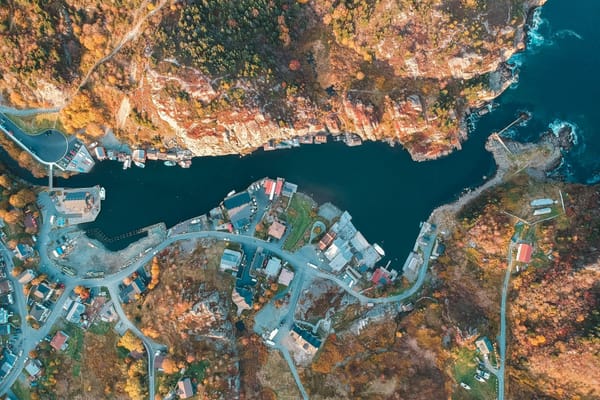
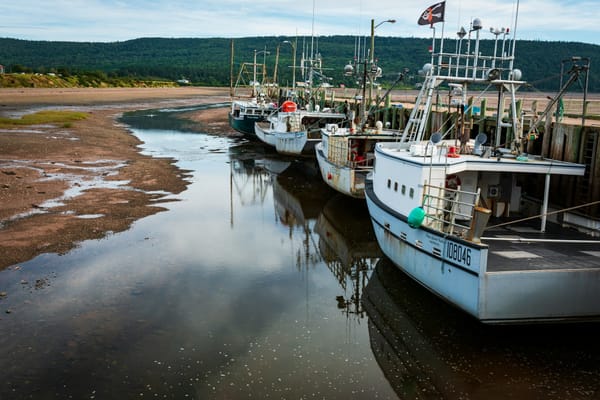
For a significant portion of the Canadian economy, and for much of the global one, that place is the ocean. Fisheries, shipping, offshore energy, coastal tourism, aquaculture, port infrastructure, and the communities built around all of these, each one sits at the end of a financial chain that begins with a lending decision, an investment mandate, or a budget allocation. Blue finance is simply the practice of making that connection visible, and then asking what follows from it.

The field is newer than it might seem and less complicated than its critics assume. It doesn't require financial institutions to abandon their existing frameworks or take on unfamiliar kinds of risk. It asks something more modest: that ocean-related consequences be brought into view alongside the financial ones, using tools and processes that already exist. The adjustments required are real but they are incremental, and the institutions best positioned to make them are the ones already operating in ocean-adjacent sectors, which in Canada includes a substantial part of the financial system.

Three ideas sit at the centre of blue finance and are worth understanding before anything else. The first is that finance acts on ocean systems indirectly, through the businesses, projects, and infrastructure it funds. A lender doesn't affect a fishery directly. It funds a vessel, or a processing plant, or a harbour improvement, and those activities have consequences that extend into the marine environment. Understanding that chain, from capital allocation to ecological outcome, is the foundational move in blue finance. Once you see it, it becomes difficult to unsee.

The second idea concerns timeframes. Financial decisions are typically made within cycles that make sense for the institution: a loan term, a budget year, a return horizon. The ecological consequences of those decisions often play out across much longer periods. The degradation of a coastal habitat, the decline of a fish population, the increased vulnerability of a shoreline, these are slow-moving processes that accumulate across many decisions and many actors. Bridging that gap, between the time horizon of a financial institution and the time horizon of a marine ecosystem, is one of the central practical challenges in the field, and considerable work has gone into developing tools to do exactly that.

The third idea is about measurement. Financial institutions are sophisticated at measuring what they're designed to measure. Risk, return, regulatory compliance, credit quality: these are assessed with rigour and consistency because the incentives and frameworks to do so are well established. Ocean outcomes have historically sat outside that measurement framework, not because they don't matter but because the methods and incentives to include them haven't been in place. That is changing. Standards are developing, data is improving, and the business case for incorporating environmental factors into financial analysis is becoming easier to make. Blue finance is in part a story about measurement catching up with consequence.

Taken together these ideas describe a field that is less about disruption than about integration. The knowledge, the institutions, and the instruments needed to do blue finance well are largely already in existence. What is developing is the connective tissue: the shared frameworks, the practical standards, and the professional fluency that make it routine to consider ocean outcomes alongside financial ones. Canada, with three ocean coastlines, a resource economy with deep marine roots, and a financial sector that already touches these industries daily, has both the reason and the capacity to be a serious participant in that development.

The posts on this site explore these ideas from different angles and at different levels of detail. Some trace the history of how blue finance emerged as a distinct field. Others examine specific instruments or frameworks. Several work through real examples where the concepts have been applied, with results worth understanding. The intention throughout is to make the field accessible to anyone who wants to understand it, whether they come from finance, from the ocean, or simply from a conviction that the two ought to be better connected.