How the Ocean Works

The ocean is layered, regionally distinct, and in constant motion in ways that operate mostly out of sight. For anyone making financial decisions connected to it, those qualities are the underlying system, not the background.

Share
How the Ocean Works
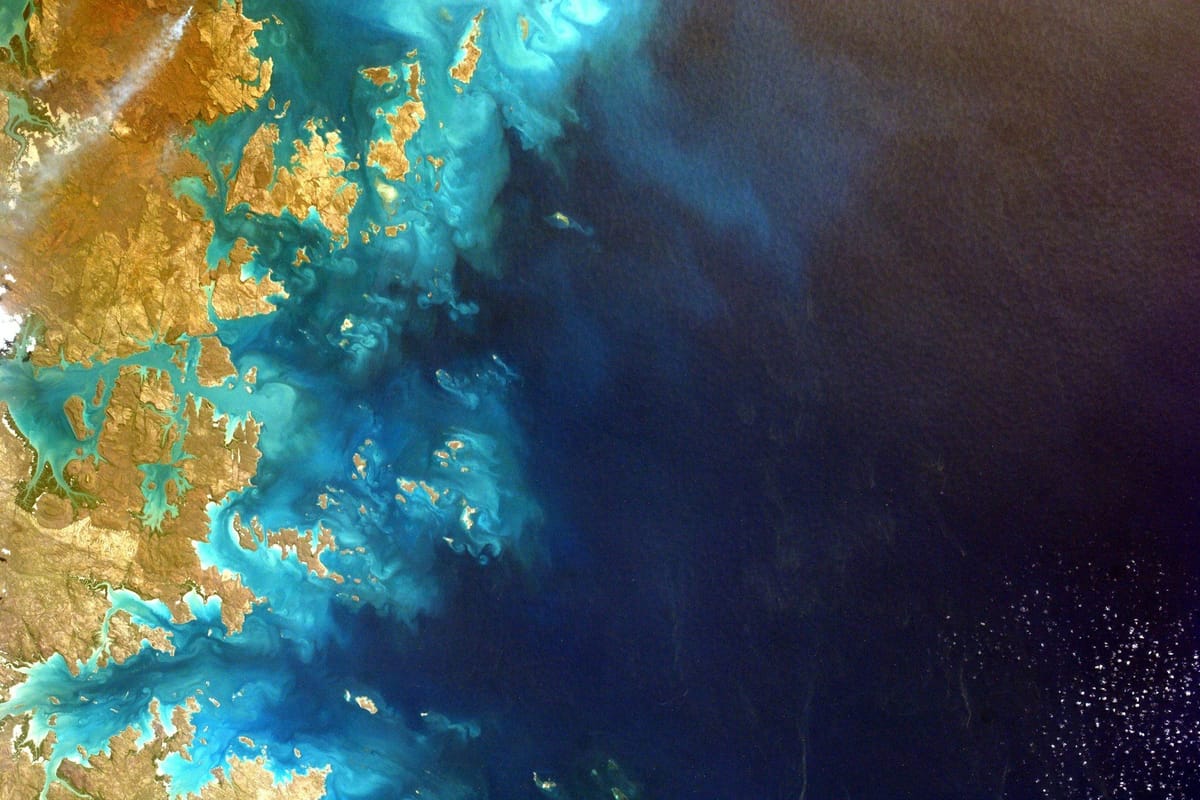
Photo by NASA / Unsplash

The ocean looks like one thing from the surface. A continuous body of water covering most of the planet, moving in response to wind and tide, more or less uniform from one part to another. That impression does not survive closer examination. The ocean is layered, regionally distinct, and in constant motion in ways that operate mostly out of sight, and those qualities shape everything from fish stocks to storm intensity to the concentration of carbon in the atmosphere.

Sunlight penetrates only the upper two hundred metres or so of the water column. Below that, the ocean is dark and cold. Between the warm, well-mixed surface layer and the cold depths below lies a sharp transition zone called the thermocline, where temperature drops steeply with depth. Most of the ocean's volume lies below the thermocline, in water that is largely disconnected from the sunlit world above. The surface and the deep are not the same ocean in any practical sense, and that distinction runs through almost everything else worth understanding about how the system works.

Water density depends on temperature and salinity. Cold water is denser than warm water. Saltier water is denser than fresh. In regions where surface water cools or becomes saltier, as happens near the poles when sea ice forms and expels salt into surrounding water, that water becomes heavy enough to sink. As it sinks, it drives circulation through the deep ocean, eventually rising again elsewhere in a cycle that moves heat, carbon, and nutrients across the planet over periods of decades to centuries. This thermohaline circulation connects the ocean's surface to its depths and connects the ocean basins to each other. It is one of the mechanisms that makes the ocean a global system rather than a collection of separate bodies of water.

At the surface, wind drives currents across thousands of kilometres. Deflected by the rotation of the earth, these currents form large rotating systems called gyres. The Gulf Stream in the North Atlantic is the most familiar example, a fast, warm current that carries heat from the tropics toward higher latitudes and makes Western Europe significantly milder than other regions at similar latitudes. The Labrador Current runs in the opposite direction, carrying cold, nutrient-rich water south along Canada's Atlantic coast. These currents are not fixed in place. They shift in response to changes in wind patterns, water temperature, and the density differences that drive the thermohaline circulation beneath them.

The ocean absorbs heat at a scale the atmosphere cannot match. More than ninety percent of the excess heat from global warming has gone into the ocean rather than the atmosphere. This absorption buffers surface temperatures and slows the pace of atmospheric warming, but it also means the ocean itself is changing in ways that take decades to become fully visible. Warmer water expands, contributing to sea level rise. Warmer surface layers stratify more strongly, meaning the boundary between the warm surface and the cold deep becomes sharper and harder for mixing to cross. That reduced mixing matters because cold, deep water carries the nutrients that sustain productivity in the sunlit zone above.

The ocean also absorbs roughly a third of the carbon dioxide humans emit. When carbon dioxide dissolves in seawater it forms carbonic acid, gradually reducing the ocean's pH in a process called ocean acidification. It makes it harder for shell-building organisms like oysters, clams, and certain corals to form and maintain their shells. In Atlantic and Pacific Canada, shellfish hatcheries are already managing for this change, adjusting water chemistry and timing to protect young animals during their most vulnerable stages. The ocean's capacity to absorb carbon has been one of the reasons atmospheric warming has been slower than it might otherwise have been. That capacity has limits, and the chemical consequences of what has already been absorbed are accumulating.

Productivity in the ocean is not evenly distributed. Most of the open ocean is relatively sparse, limited by the scarcity of nutrients in the sunlit zone. The richest areas tend to be coastal or upwelling zones, where physical processes bring cold, nutrient-rich water from depth to the surface. These zones cover a small fraction of the ocean's surface but account for roughly half of global fisheries landings. Along Canada's Pacific coast, seasonal upwelling of nutrient-rich subpolar water sustains the productivity that supports salmon, herring, and halibut. In Atlantic Canada, the cold Labrador Current carries nutrients south from the Arctic, meeting warmer Gulf Stream water in conditions that have historically been among the most productive on the planet.

Those conditions are shifting. The Gulf of St. Lawrence has warmed faster than most of the global ocean and has lost significant dissolved oxygen in its deeper layers, stressing cod and snow crab populations that depend on cold, well-oxygenated water. In the Arctic, freshwater from melting ice is making surface layers lighter, strengthening stratification and reducing the mixing that sustains productivity. Plankton communities are shifting toward smaller species, with consequences that move through the food web in ways that are still being traced.

For anyone making financial decisions connected to the ocean, in fisheries, aquaculture, insurance, coastal infrastructure, or conservation finance, these dynamics are the underlying system. Fisheries yields depend on temperature, oxygen, and the food web that starts with phytoplankton. Aquaculture siting depends on water chemistry and circulation patterns that are changing. Coastal infrastructure is exposed to sea level rise and storm intensity, both of which are influenced by how the ocean absorbs and redistributes heat. Blue carbon projects, which finance the protection of coastal wetlands as carbon stores, depend on the same ocean-atmosphere exchange processes described here.

The ocean is not a stable backdrop. It is a system with its own dynamics, and those dynamics are changing faster than the financial frameworks used to assess ocean-related risk have yet fully accounted for.